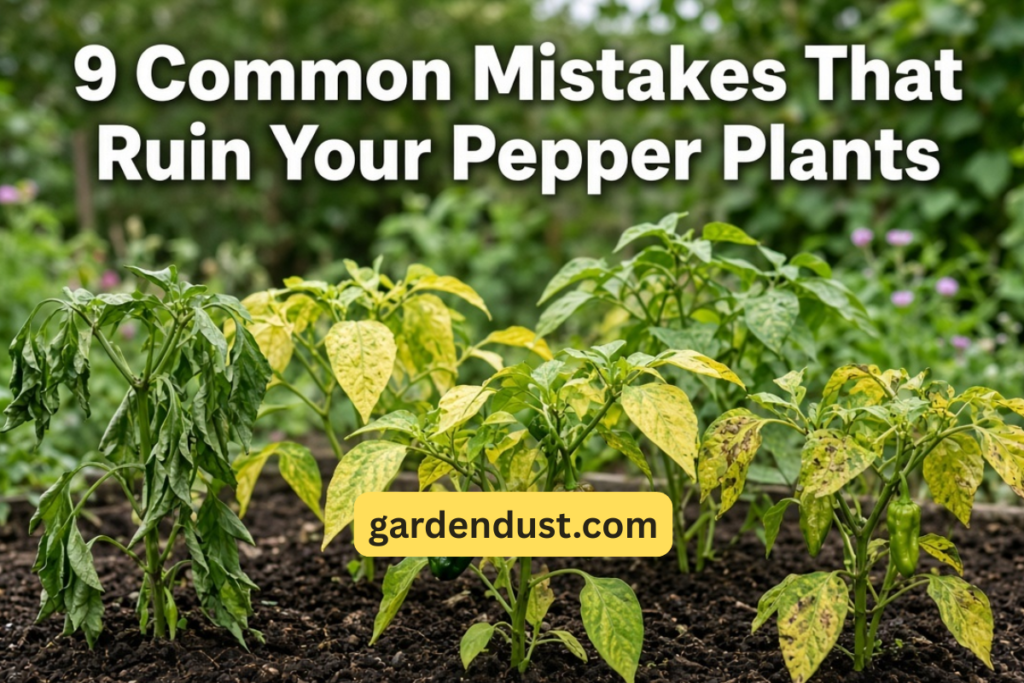
Pepper plants (bell peppers, chili peppers, and other varieties) are rewarding to grow, but they are also sensitive. Many gardeners struggle with stunted growth, poor fruit set, yellow leaves, or sudden plant decline because of a few repeated mistakes. Avoiding these common errors can dramatically improve your harvest. Even experienced gardeners sometimes overlook simple factors like soil temperature, watering habits, or spacing that make a big difference. Understanding what peppers truly need helps you prevent problems before they start. Small adjustments in care often lead to stronger plants, more flowers, and a much heavier yield of crisp, flavorful peppers. With the right approach, you can enjoy healthy plants from seedling stage all the way through harvest.
Here are the nine most frequent mistakes that ruin pepper plants—and how to fix them.
1. Planting Too Early in Cold Soil
Peppers are warm-season crops that hate cold roots. Planting seedlings when soil temperatures are still below 60–65°F (15–18°C) leads to stunted growth, yellow leaves, and delayed flowering.
Fix: Wait until nighttime temperatures stay consistently above 55°F (13°C) and the soil has warmed. Use black plastic mulch or cloches to warm the soil if you want an earlier start.
2. Overwatering
Constantly wet soil is one of the fastest ways to kill pepper plants. Overwatering causes root rot, yellowing leaves, and wilting even when the soil is moist.
Fix: Allow the top inch of soil to dry out between waterings. Water deeply but less frequently. Ensure pots and garden beds have excellent drainage. Mulch helps regulate moisture without keeping roots soggy.
3. Underwatering or Inconsistent Moisture
Peppers need steady moisture, especially once they start flowering and fruiting. Letting plants dry out completely causes blossom drop, small fruits, and leaf curl.
Fix: Keep soil evenly moist. Check moisture regularly during hot weather. A consistent watering schedule or drip irrigation works better than occasional deep soaks followed by long dry periods.
4. Using Too Much Nitrogen Fertilizer
High-nitrogen fertilizers produce lush green leaves but few flowers and fruits. Excess nitrogen also makes plants more attractive to pests and more susceptible to disease.
Fix: Use a balanced fertilizer or one higher in phosphorus and potassium once flowering begins (for example, 5-10-10). Avoid heavy feeding with lawn fertilizers or high-nitrogen products.
READ ALSO:-9 Reasons Cucumber Flowers Fall Off
5. Not Giving Enough Sunlight
Pepper plants need at least 6–8 hours of direct sun daily. Insufficient light results in leggy growth, weak stems, and poor fruit production.
Fix: Choose the sunniest spot in your garden. If growing in containers, move them to track the sun. Reflective mulch can also help increase light around the plants.
6. Skipping the Hardening-Off Process
Transplanting tender seedlings straight from indoors into the garden shocks them. This often causes wilting, leaf drop, and slow recovery.
Fix: Harden off seedlings for 7–10 days. Gradually expose them to outdoor conditions—starting with a few hours of shade and increasing time and sun exposure each day.
7. Poor Soil Drainage or Heavy Soil
Peppers hate “wet feet.” Heavy clay or compacted soil holds too much water and restricts root growth, leading to weak plants and root diseases.
Fix: Improve soil with compost and organic matter before planting. Raised beds or large containers with well-draining potting mix are excellent alternatives for heavy soils.
READ ALSO:-6 Reasons-Why Are My Carrots Forked or Misshapen?
8. Overcrowding the Plants
Planting peppers too close together reduces airflow, increases humidity around the foliage, and encourages fungal diseases. Plants also compete for light, water, and nutrients.
Fix: Space most pepper varieties 18–24 inches apart. Follow seed packet recommendations for the specific type you are growing. Good spacing also makes pest inspection easier.
9. Ignoring Pests and Early Disease Signs
Aphids, spider mites, thrips, and flea beetles can quickly weaken pepper plants. Fungal issues such as bacterial spot or powdery mildew often start small and spread if ignored.
Fix: Inspect plants regularly, especially the undersides of leaves. Use neem oil, insecticidal soap, or strong water sprays at the first sign of pests. Remove affected leaves and improve air circulation. Avoid working among wet plants to reduce disease spread.
Bonus Tips for Stronger Pepper Plants
- Support taller varieties with stakes or cages to prevent stem breakage.
- Maintain consistent temperatures when possible—extreme heat can also cause blossom drop.
- Rotate crops each year to reduce soil-borne disease pressure.
- Choose disease-resistant varieties suited to your climate.
Most pepper problems are caused by environmental stress or simple care mistakes rather than mysterious diseases. By planting at the right time, managing water carefully, providing enough sun, and watching for pests, you give your plants the best chance to produce a heavy crop of healthy peppers.
Avoid these nine common mistakes, and your pepper plants will reward you with stronger growth and a much better harvest. Happy Gardening…