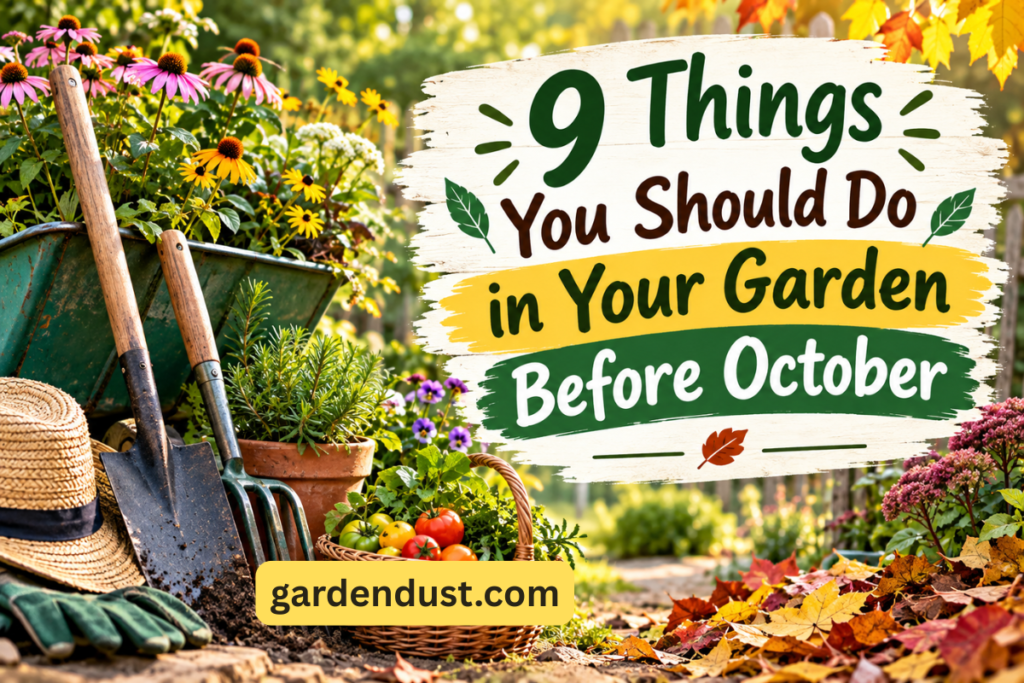
September is the perfect time to give your garden a little extra attention before October arrives. As temperatures begin to change and summer growth slows down, a few simple gardening tasks can help your plants stay healthy and prepare your garden for the next growing season.
Whether you grow vegetables, flowers, herbs, or a mixture of everything, these 9 things to do in your garden before October can make a noticeable difference.
1. Remove Dead and Diseased Leaves
Start by walking through your garden and removing yellow, dead, damaged, or diseased leaves.
Dead foliage can provide hiding places for pests and may allow certain fungal diseases to remain in the garden. Don’t automatically add diseased plant material to your compost pile, especially if your compost doesn’t get hot enough to destroy pathogens.
Healthy fallen leaves, however, can be saved for compost or used as mulch.
Garden tip: Don’t remove healthy leaves simply because they look a little old. Focus on foliage that is clearly dead, damaged, or diseased.
2. Give Your Soil Some Attention
After a long growing season, garden soil can become depleted and compacted.
Before October, loosen compacted soil around established plants and add a layer of finished compost or well-rotted organic matter to garden beds.
Compost can improve soil structure, help retain moisture, and provide nutrients as it breaks down.
You don’t need to dig deeply around established plants. Disturbing their roots can do more harm than good.
Try this: Add a thin layer of compost around plants and gently work it into the top layer of soil where appropriate.
3. Check Your Plants for Pests
Before cooler weather arrives, inspect your plants carefully for insects and signs of pest damage.
Look underneath leaves, along stems, and around new growth. Watch for:
- Aphids
- Caterpillars
- Spider mites
- Whiteflies
- Scale insects
- Slugs and snails
Catching a small pest problem early is much easier than dealing with a major infestation later.
If you find pests, identify them before treating the plant. Different pests require different approaches, and unnecessary pesticide use can also affect beneficial insects.
4. Prune Only What Actually Needs Pruning
September can be a tempting time to start cutting everything back, but avoid unnecessary pruning.
Remove dead, broken, or diseased branches when needed. For shrubs and flowering plants, however, pruning at the wrong time can remove flower buds or encourage tender new growth that may be vulnerable to changing temperatures.
Always consider what plant you are pruning and when it normally flowers before making major cuts.
Remember: More pruning doesn’t necessarily mean healthier plants.
5. Collect Seeds From Suitable Plants
If some of your flowers or vegetables have produced mature seeds, September can be a good time to collect them.
Choose seeds from healthy, vigorous plants. Allow seed heads or pods to mature properly before collecting them, then dry the seeds thoroughly before storing.
Store them in a cool, dry place in labeled paper envelopes or suitable airtight containers, depending on the type of seed.
Don’t forget to write down:
Plant name + variety + year collected
That simple label can save you from guessing later.
6. Add Mulch Before the Weather Changes
A fresh layer of organic mulch can help protect garden soil as conditions change.
Materials such as shredded leaves, straw, pine needles, or compost can help reduce moisture loss, suppress weeds, and moderate soil temperature.
Keep mulch slightly away from plant stems and tree trunks. Piling mulch directly against stems can create overly damp conditions and encourage problems.
A few inches of appropriate mulch is generally more useful than creating a very thick pile.
7. Harvest Vegetables Regularly
Don’t leave mature vegetables sitting on plants unnecessarily.
Regular harvesting encourages many vegetable plants to continue producing and prevents overripe produce from becoming a magnet for pests.
Check your garden every few days for:
- Tomatoes
- Beans
- Cucumbers
- Peppers
- Zucchini
- Eggplants
- Herbs
Some vegetables are best harvested young and tender, while others develop better flavor when allowed to mature fully.
Garden tip: If you have more produce than you can use, preserve, freeze, dry, or share it instead of letting it go to waste.
8. Plan Your Next Planting
Before October arrives, take a few minutes to decide what you want to grow next.
Depending on your climate, fall can be an excellent time for certain vegetables, herbs, bulbs, and cool-season flowers.
Make a simple list of:
- What you want to plant
- Where you’ll plant it
- How much sunlight the area receives
- When each plant should be started
- How much space it needs
Planning now prevents the common problem of buying plants or seeds without knowing where they’re going to grow.
Bonus idea: Take photos of your garden before removing summer plants. They can help you remember which areas worked well and which ones need improvement next season.
9. Clean and Organize Your Gardening Tools
Your plants aren’t the only things that need attention.
Before October, clean soil and plant debris from your gardening tools. Wash and dry tools thoroughly, then sharpen cutting tools if necessary.
Pay particular attention to:
- Pruners
- Garden shears
- Shovels
- Hand trowels
- Hoes
- Garden gloves
- Plant supports
Clean tools are easier to use and can help reduce the spread of plant diseases between plants.
This is also a good opportunity to replace broken tools and organize your gardening supplies before you need them again.
Final Thoughts
You don’t need to completely overhaul your garden before October. A few small jobs can make a big difference. Start by removing unhealthy plant material, checking for pests, improving the soil, harvesting what is ready, and preparing your beds for the next season. Then take some time to clean your tools and plan what you want to grow next.
The goal isn’t to have a perfect garden—it’s to leave your garden healthier and better prepared for whatever comes next. Happy Gardening….
Quick Before-October Garden Checklist
☐ Remove dead and diseased leaves
☐ Improve the soil with compost
☐ Check plants for pests
☐ Prune only when necessary
☐ Collect mature seeds
☐ Add appropriate mulch
☐ Harvest ripe vegetables
☐ Plan your next planting
☐ Clean and organize gardening tools