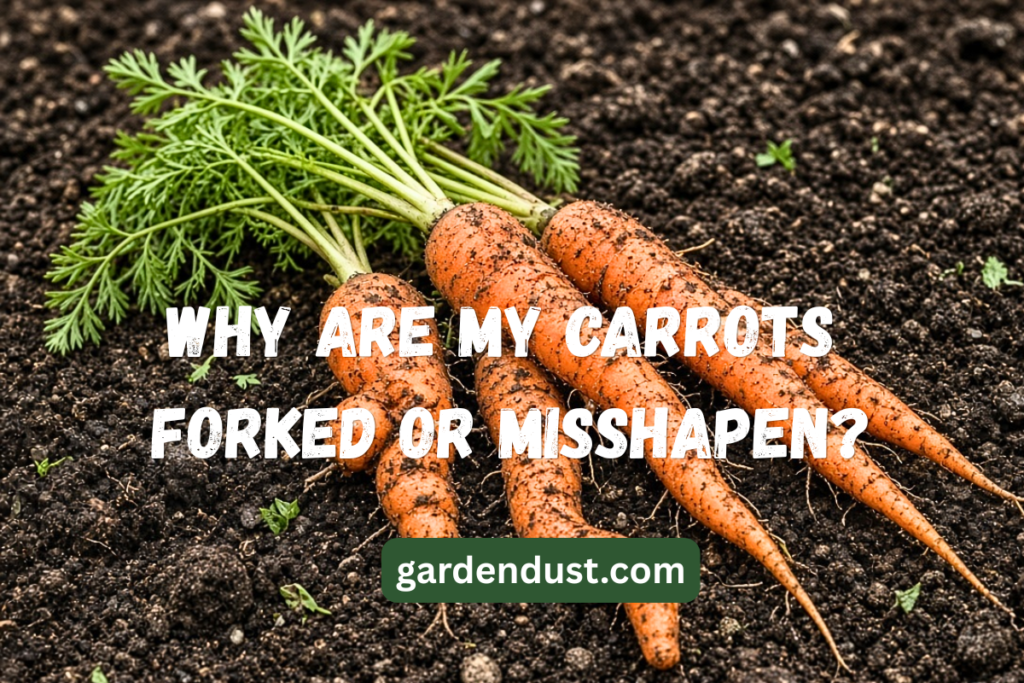
Harvest day arrives and you pull up a batch of carrots only to find twisted, multi-pronged, or oddly shaped roots instead of the classic straight orange cylinders. Forked or misshapen carrots are one of the most common frustrations for home gardeners, yet they are almost always preventable once you understand the causes.
These deformities do not mean your carrots are inedible or unsafe. They usually taste just as good (sometimes even sweeter). The issue is primarily cosmetic and yields. Here is what causes carrots to fork or grow misshapen—and how to grow straighter roots next season.
The Root Cause: Damage or Obstruction to the Growing Tip
Carrots form a single taproot. Anything that damages or blocks the delicate tip of that young root forces the plant to send out side roots. The result is forking, branching, twisting, or stunting. Most problems fall into a few clear categories.
1. Rocky, Compacted, or Heavy Soil
This is the number-one reason gardeners end up with forked carrots. When the developing root hits a stone, gravel, hard clod, stick, or compacted layer (such as a plow pan), it cannot continue straight down. It either bends around the obstacle or splits into multiple roots.
Heavy clay soils that crust or stay dense after watering create the same problem. Fresh, lumpy compost or undecomposed manure can act as physical barriers as well.
READ ALSO:-9 Reasons Cucumber Flowers Fall Off (And How to Fix Them)
Fix it: Dig or loosen the bed at least 12 inches deep. Remove rocks, sticks, and large clods. Amend heavy soil with well-rotted compost and some sand or fine grit for better texture. Raised beds filled with a light, stone-free mix often produce the straightest carrots.
2. Overcrowding and Poor Thinning
Carrots need space underground. When seedlings grow too close together, their roots compete and twist around one another. Crowding also reduces airflow and can increase disease pressure.
Fix it: Sow seeds thinly or use seed tape. Once seedlings are 2–3 inches tall, thin them to the spacing recommended on the packet (usually 1–3 inches apart depending on variety). Snip extras at soil level rather than pulling them out, which can disturb neighboring roots.
3. Excess Nitrogen or Fresh Manure
Carrots are light feeders. Too much nitrogen (from high-nitrogen fertilizer or fresh manure applied just before planting) encourages lush tops at the expense of the root. It can also produce hairy roots and forking as the plant branches in search of balance.
Fix it: Use only well-rotted compost worked into the soil weeks or months ahead of planting. Avoid fresh manure in the carrot bed. Choose a balanced or low-nitrogen fertilizer if you fertilize at all, and apply it sparingly.
4. Pests That Attack the Root Tip
Root-knot nematodes are microscopic worms that feed on roots and create galls or knots. Early feeding often kills or damages the growing tip, leading to forked, knobby, or hairy carrots. Other soil pests such as carrot rust fly larvae or wireworms can cause similar tip damage.
Fix it: Practice crop rotation (avoid planting carrots or related crops in the same spot for 2–3 years). In heavily infested soil, solarize the bed or grow resistant varieties if available. Healthy soil with good organic matter and microbial life helps suppress nematode populations over time.
5. Transplanting and Mechanical Damage
Carrots strongly prefer to be direct-sown. Transplanting seedlings almost always damages the delicate taproot tip and results in forked or branched roots. Rough thinning or deep cultivation near the plants can cause the same injury.
Fix it: Direct-sow seeds where the carrots will grow. If you must start indoors, use biodegradable pots that can be planted whole without root disturbance—and even then, results are often inferior to outdoor sowing.
6. Inconsistent Moisture and Other Stresses
While fluctuating water more commonly causes lengthwise cracking (splitting), severe drought followed by heavy watering can also contribute to distorted growth. Extreme heat, shallow containers, or dense weed competition can further stress young roots.
Fix it: Keep soil evenly moist—never bone-dry or waterlogged—especially during the first 6–8 weeks. Mulch after seedlings are established to stabilize moisture and suppress weeds. Choose containers at least 12 inches deep if growing in pots.
Are Misshapen Carrots Still Good to Eat?
Yes. Forked, twisted, or knobby carrots are perfectly safe and nutritious. Simply scrub them well, trim any damaged sections, and use them as usual—roasted, in soups, juiced, or pureed. Many gardeners actually prefer the flavor of “ugly” home-grown carrots over perfect supermarket ones.
Quick Prevention Checklist for Straight Carrots
- Prepare deep, loose, stone-free soil well before planting.
- Direct-sow rather than transplant.
- Thin seedlings carefully to proper spacing.
- Avoid excess nitrogen and fresh manure.
- Maintain consistent soil moisture.
- Rotate crops and manage soil pests.
- Choose shorter or half-long varieties (such as Chantenay or Nantes types) if your soil is challenging.
With these steps, most gardeners see a dramatic improvement in root shape within a single season. A few odd carrots will still appear now and then—gardening is rarely perfect—but the majority should grow long, straight, and easy to peel.
Straight carrots look great in the kitchen, yet the misshapen ones tell a useful story about your soil and growing conditions. Pay attention to what they reveal, adjust your methods, and enjoy both the perfect and the perfectly imperfect harvests. happy Gardening….