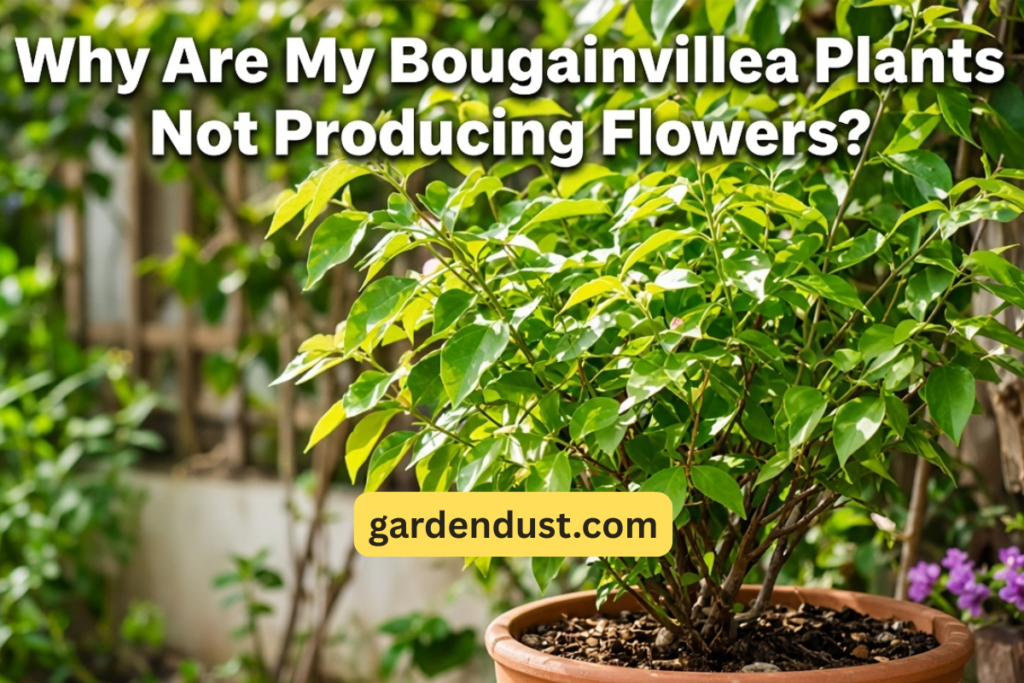
Bougainvillea is famous for its spectacular displays of bright pink, purple, red, orange, or white bracts that look like flowers. When a healthy-looking plant produces only green leaves and no color, gardeners often feel disappointed. The good news is that bougainvilleas are not particularly fussy once you understand what they need to bloom.
Most flowering problems come down to light, water, nutrients, pruning timing, or plant maturity. This guide explains the most common reasons your bougainvillea is not producing flowers and how to correct them.
1-Not Enough Sunlight
Bougainvilleas are full-sun plants. They need at least 6–8 hours of direct sunlight every day to trigger blooming. In partial shade they grow plenty of leaves but produce few or no colorful bracts.
Solution: Move potted plants to the sunniest spot available. For in-ground plants, consider whether nearby trees or structures have grown and started casting shade. Even a few hours of extra sun can make a noticeable difference within one growing season.
READ ALSO:-How to Save a Dying Peace Lily (Spathiphyllum): 8-Steps
2-Excess Nitrogen Fertilizer
Nitrogen encourages leafy growth at the expense of flowers. Many gardeners fertilize regularly with balanced or high-nitrogen products and end up with big green plants that refuse to bloom.
Solution: Switch to a fertilizer higher in phosphorus and potassium (the middle and last numbers on the label, such as 5-10-10 or 2-10-10). Feed sparingly during the growing season. Some gardeners stop fertilizing altogether once the plant is established and still get excellent blooms.
3-Overwatering or Inconsistent Moisture
Bougainvilleas prefer to dry out slightly between waterings. Constantly moist soil leads to lush foliage and poor flowering. In containers, soggy roots are especially common.
Solution: Allow the top 1–2 inches of soil to dry before watering again. Ensure pots have excellent drainage. In the ground, avoid frequent light watering; deep, infrequent watering is better. Slight drought stress often encourages blooming.
4-Incorrect Pruning Timing
Heavy pruning at the wrong time of year removes the wood that produces flowers. Bougainvilleas bloom on new growth that develops after the previous season’s flowering wood.
Solution: Prune right after a major flowering cycle ends, or in late winter/early spring in frost-free climates. Avoid hard pruning in mid-summer if you want continuous blooms. Light tip-pruning is fine to shape the plant.
5-Plant Is Too Young or Recently Transplanted
Young plants and those that have just been moved or repotted often focus energy on root and leaf growth rather than flowers. It can take one to two full seasons for a new plant to settle in and bloom heavily.
Solution: Be patient. Provide proper light and care, and flowering usually improves as the plant matures and becomes slightly root-bound (especially in pots).
READ ALSO:-Why Mexican Petunia Is Not Flowering
6-Lack of Root Restriction
Interestingly, bougainvilleas often flower better when their roots are somewhat confined. Plants grown in large, open garden beds with unlimited root space may produce more leaves than blooms.
Solution: In containers, choose a pot that is only slightly larger than the root ball. For in-ground plants, some gardeners plant them in a large buried container or root-prune occasionally to encourage flowering.
7-Temperature and Climate Factors
Bougainvilleas are tropical and subtropical plants. Cool temperatures, especially nights below 60°F (15°C), can delay or stop flowering. In colder climates they may only bloom in the warmest months.
Solution: In cooler regions, grow them in containers so they can be moved to the warmest, sunniest microclimate. Protect from cold drafts and late spring chills.
8-Soil and pH Issues
These plants prefer well-draining, slightly acidic to neutral soil (pH 5.5–7.0). Heavy clay or waterlogged soil stresses the plant and reduces blooms.
Solution: Improve drainage with compost or grit. A soil test can confirm pH; amend if necessary. Avoid rich, constantly moist garden soil.
How to Encourage More Blooms
- Give maximum sunlight.
- Water deeply but infrequently.
- Use a low-nitrogen, bloom-boosting fertilizer.
- Prune at the right time.
- Allow mild stress (slightly dry soil and somewhat restricted roots).
- Be patient with young or newly planted specimens.
Many gardeners notice a big improvement simply by reducing water and fertilizer while increasing sun exposure. Once the plant starts flowering, maintain consistent care and it will often bloom repeatedly through the warm season.
Final Tips for Success
Bougainvilleas are tough once established. They reward bright light, good drainage, and a bit of tough love more than constant pampering. If your plant is green and healthy but flowerless, check the light first—then look at watering and feeding habits. Small adjustments in these areas usually bring the colorful bracts back.
With the right conditions, your bougainvillea should reward you with the vivid, long-lasting color it is known for. Happy Gardening…