Growing beans is one of the most rewarding experiences for home gardeners. These nutrient-rich legumes produce abundant yields with relatively little effort—when done right. Yet many beginners (and even experienced growers) make simple mistakes that reduce harvests or kill plants outright.
Avoiding the following ten common bean-growing mistakes will dramatically improve your chances of a healthy, productive crop of bush, pole, or runner beans.
1. Planting Too Early in Cold Soil
Beans are warm-season crops. They need soil temperatures of at least 60°F (15°C), ideally 70°F (21°C), to germinate well. Planting in cold, wet soil leads to seed rot and poor stands.
Wait until after the last frost and check soil temperature with a thermometer. In cooler climates, start seeds indoors or use black plastic to warm the bed.
2. Choosing the Wrong Variety for Your Climate and Space
Bush beans suit small gardens and containers, while pole beans need vertical space and produce over a longer period. Some varieties tolerate heat better; others prefer cooler conditions.
Match the type to your growing zone, available space, and preferred harvest window. Read seed packet descriptions carefully before buying.
3. Neglecting Soil Preparation and pH
Beans prefer well-drained, fertile soil with a pH between 6.0 and 7.0. Heavy clay or waterlogged ground causes root problems, while overly acidic or alkaline soil limits nutrient uptake.
Work in compost before planting and test your soil. Avoid fresh manure, which can burn seedlings and promote disease.
4. Overwatering or Underwatering
Inconsistent moisture is a major yield killer. Too much water encourages root rot and fungal diseases; too little causes blossom drop and tough pods.
Aim for about 1 inch of water per week, delivered deeply. Mulch to retain moisture and keep soil evenly moist, especially during flowering and pod development. Water at the base rather than overhead.
5. Planting Seeds Too Deeply or Too Closely
Bean seeds sown deeper than 1–1.5 inches struggle to emerge. Crowding reduces air circulation and invites disease while limiting pod production.
Follow spacing guidelines: bush beans 2–4 inches apart in rows 18–24 inches apart; pole beans 3–6 inches apart at the base of supports. Thin seedlings if necessary.
6. Failing to Provide Support for Pole Beans
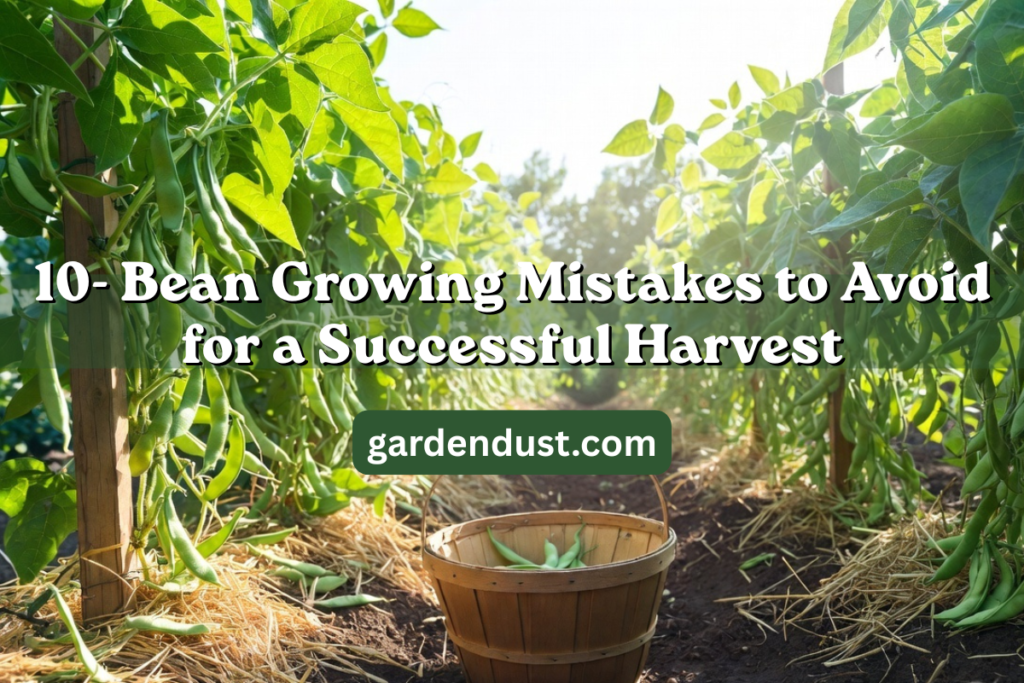
Pole and runner beans climb. Without sturdy trellises, poles, or netting, vines sprawl on the ground, increasing disease risk and making harvest difficult.
Install supports at planting time so roots are not disturbed later. Teepees, A-frames, or cattle panels work well and can reach 6–8 feet.
7. Over-Fertilizing with Nitrogen
Beans fix their own nitrogen through root nodules with the help of rhizobia bacteria. Excess nitrogen fertilizer produces lush foliage at the expense of flowers and pods.
Use a balanced or low-nitrogen fertilizer only if soil is very poor. Inoculating seeds with rhizobia can boost performance in new beds.
8. Ignoring Crop Rotation and Succession Planting
Planting beans in the same spot year after year builds up soil-borne diseases and pests. Continuous single plantings also mean a short harvest window.
Rotate beans with non-legume crops for at least two to three years. For a longer season, sow succession plantings of bush beans every two to three weeks until midsummer.
9. Overlooking Pests and Diseases Until It’s Too Late
Aphids, Mexican bean beetles, spider mites, and diseases such as anthracnose, rust, and bacterial blight can devastate plants quickly.
Inspect plants regularly. Encourage beneficial insects, use row covers early in the season, and remove infected foliage promptly. Choose disease-resistant varieties when available. Good air circulation and avoiding overhead watering help prevent many fungal issues.
10. Harvesting Too Late or Incorrectly
Leaving pods on the plant too long signals the plant to stop producing new flowers. Over-mature beans become tough and stringy.
Pick snap beans when pods are firm, crisp, and seeds are still small—usually every two to three days. For shelling or dry beans, allow pods to mature fully on the plant. Use two hands when harvesting to avoid damaging stems.
Extra Tips for Bigger Harvests
- Inoculate seeds if growing beans in a new area.
- Provide consistent moisture and moderate fertility.
- Grow in full sun (at least 6–8 hours daily).
- Keep the garden weed-free, especially while plants are young.
By sidestepping these ten common mistakes—planting in cold soil, choosing the wrong variety, poor soil prep, watering errors, incorrect spacing, missing supports, excess nitrogen, skipping rotation, ignoring pests, and late harvesting—you set the stage for a generous bean harvest.
Start with quality seeds, prepare the soil properly, and stay attentive throughout the season. Your plants will repay the care with crisp, flavorful beans all summer long. Happy Gardening….