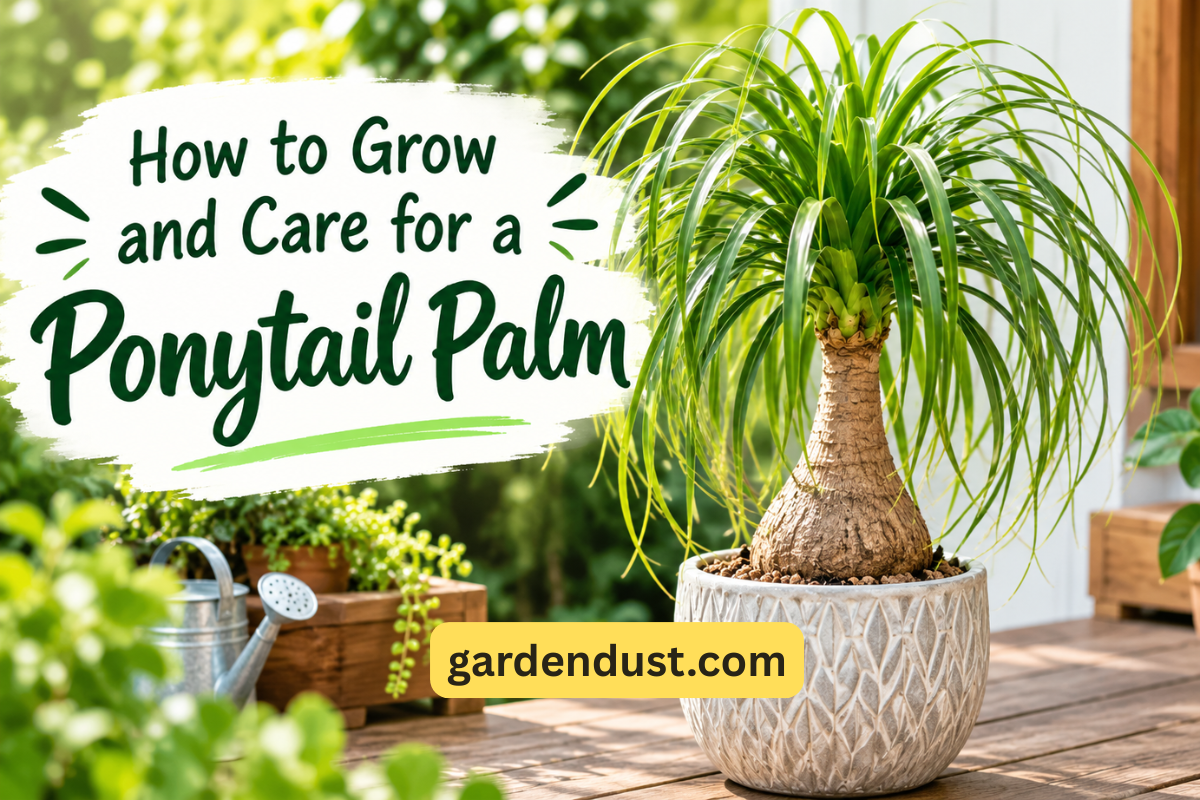
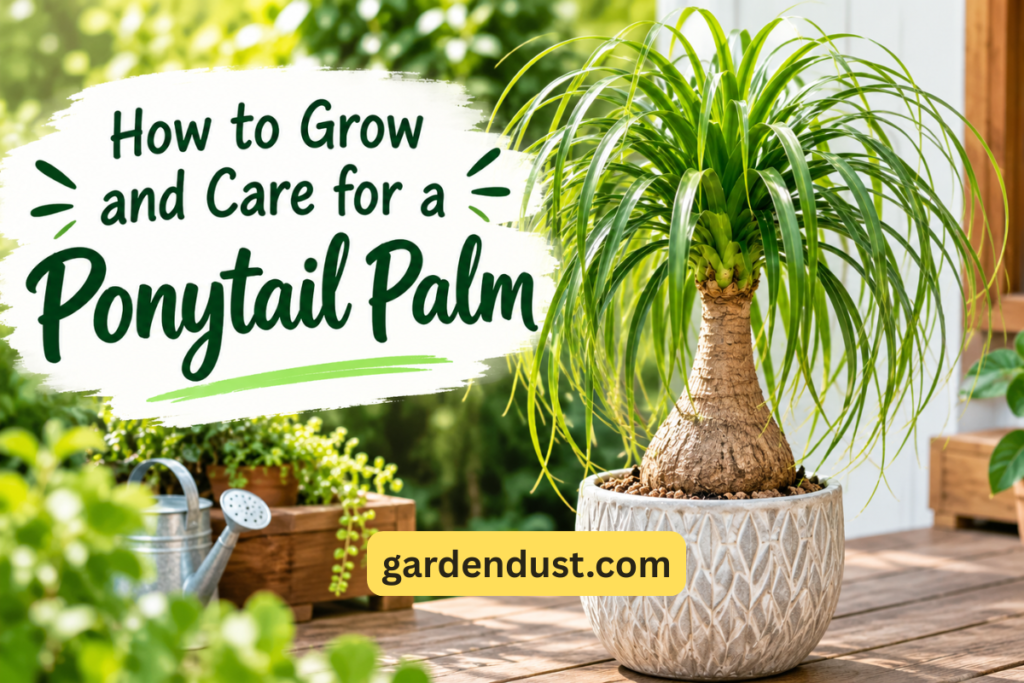
The ponytail palm is one of the easiest houseplants to grow, making it a great choice for beginners. Despite its name, the ponytail palm isn’t actually a true palm. It is a drought-tolerant plant known for its swollen, water-storing trunk and long, narrow leaves that resemble a ponytail.
With plenty of light, well-draining soil, and careful watering, a ponytail palm can thrive indoors for many years.
Here’s everything you need to know about how to grow and care for a ponytail palm.
Botanical Name–Beaucarnea recurvata
Common Name-Ponytail Palm
Native-Eastern Mexico
Genus–Beaucarnea
Plant Type-Succulent, evergreen perennial
Plant Size-Up to 15–30 ft outdoors; 4–6 ft indoors
Variety–Beaucarnea recurvata
Growing Season-Spring–Summer
1. Choose the Right Location
Ponytail palms love bright light.
Place your plant near a sunny window where it can receive several hours of bright light each day. A south- or west-facing window can work well indoors, although very intense direct sunlight through glass may require some adjustment.
If your plant is kept in a darker location, its growth may become slower and its leaves may become thinner or less vigorous.
Tip: Rotate the pot occasionally so all sides of the plant receive light evenly.
2. Use Well-Draining Soil
Good drainage is essential for a healthy ponytail palm.
Because the plant stores water in its swollen trunk, it doesn’t need soil that stays wet for long periods. A fast-draining cactus or succulent potting mix is a good option.
If using a regular houseplant mix, adding materials that improve drainage can help prevent excess moisture around the roots.
The goal is simple: moisture should be able to drain away quickly.
3. Choose a Pot With Drainage Holes
Your ponytail palm should always be planted in a container with drainage holes.
A decorative pot without drainage can trap water around the roots, increasing the risk of root rot.
When watering, allow excess water to drain completely from the bottom of the pot. Don’t allow the plant to sit in a saucer filled with water.
READ ALSO:-How to Grow Ptilotus
4. Don’t Water Too Often
Overwatering is one of the biggest problems with ponytail palms.
The swollen base of the plant stores water, allowing it to tolerate dry conditions. Before watering, check the soil with your finger. If the soil is still moist, wait. When the soil has dried out substantially, water thoroughly and allow the excess water to drain away.
During winter, when growth slows and indoor conditions may be cooler, your ponytail palm may need watering less frequently.
Remember: It’s better to check the soil than to follow a strict weekly watering schedule.
5. Give It Plenty of Sunlight
Light plays a major role in healthy ponytail palm growth.
A plant receiving plenty of bright light is more likely to produce strong leaves and maintain compact growth. If you’ve recently moved your plant from a low-light location to strong direct sunlight, introduce it gradually to reduce the chance of leaf scorch.
6. Keep the Plant in a Warm Location
Ponytail palms prefer warm indoor conditions.
Keep the plant away from cold drafts, air-conditioning vents, and locations where temperatures can drop significantly. Normal household temperatures are generally suitable during the growing season.
If you grow your ponytail palm outdoors in a suitable climate, protect it from prolonged cold or frost.
7. Fertilize Sparingly
Ponytail palms aren’t heavy feeders.
During active growth, you can provide a diluted, balanced houseplant fertilizer occasionally. Avoid excessive fertilizing because too much fertilizer can lead to weak growth or salt buildup in the soil.
There is no need to fertilize frequently, particularly during winter when the plant’s growth naturally slows.
Tip: Always follow the fertilizer’s label instructions rather than assuming more fertilizer means faster growth.
8. Don’t Rush to Repot
Ponytail palms are relatively slow-growing and often prefer being slightly root-bound.
You don’t need to move your plant into a much larger container every year.
Repot when the plant has clearly outgrown its container, the roots are severely crowded, or the potting mix has broken down and no longer drains properly.
When repotting, choose a container only slightly larger than the current one.
9. Prune Damaged Leaves
Ponytail palms generally don’t require heavy pruning. If the leaves develop brown or damaged sections, you can trim away the damaged portions with clean, sharp scissors.
If an entire leaf becomes yellow or dead, it can be removed from the base. Avoid cutting into the swollen trunk because unnecessary damage can create problems for the plant.
10. Watch for Brown Leaf Tips
Brown tips are fairly common on ponytail palms and don’t always mean the plant is dying.
Possible causes include:
- Very dry indoor air
- Inconsistent watering
- Excess fertilizer salts
- Excessive direct sunlight after a sudden change
- Damaged or aging leaves
First check the soil and the plant’s growing conditions. Don’t automatically increase watering simply because the leaf tips are brown.
11. Watch for Pests
Ponytail palms are generally low-maintenance, but they can occasionally attract common houseplant pests such as spider mites, mealybugs, and scale insects.
Inspect the leaves and stems regularly, particularly if the plant appears unhealthy. If you notice pests, isolate the plant from other houseplants and address the infestation promptly using an appropriate treatment.
12. Propagating a Ponytail Palm
Ponytail palms can sometimes produce offsets, or small shoots, around the base of a mature plant.
These can potentially be separated and grown into new plants when they are sufficiently developed and have their own roots. Propagation can take patience, and success isn’t guaranteed with every offset. Growing ponytail palms from seed is also possible, but it is a much slower process and isn’t usually the easiest option for a beginner.
Common Care Mistakes
Even though ponytail palms are easy to care for, a few mistakes can cause problems.
Overwatering
Watering too frequently can keep the roots wet and lead to root problems.
Poor Drainage
A pot without drainage holes or heavy, water-retaining soil can cause moisture to remain around the roots.
Too Little Light
Although ponytail palms can tolerate less-than-ideal conditions for a while, insufficient light can result in slow or weak growth.
Oversized Pots
A very large pot holds more moisture around the roots and can make overwatering easier.
Excess Fertilizer
Ponytail palms don’t need frequent feeding. Too much fertilizer can damage the plant rather than encourage healthier growth.
How Often Should You Water a Ponytail Palm?
There isn’t one exact watering schedule that works for every ponytail palm. Instead, check the soil before watering. Factors such as light, temperature, pot size, soil type, humidity, and season all affect how quickly the soil dries. During active growth, the plant may need water more often than it does during winter.
The most important rule is:-Let the soil dry substantially before watering again.
Final Thoughts
A ponytail palm is a fantastic choice if you want a striking houseplant without a complicated care routine. Give it bright light, well-draining soil, a pot with drainage holes, and careful watering, and it can remain healthy for years.
The biggest secret to successful ponytail palm care is simple: don’t love it with too much water. Its swollen trunk is designed to store moisture, so allowing the soil to dry between watering’s is one of the best things you can do for this unusual and beautiful plant. Happy Gardening….