Mulch can be one of the best things you add to your garden. It helps retain soil moisture, suppress weeds, regulate soil temperature, and improve the appearance of flower beds and vegetable gardens.
But mulch is not always beneficial when it is used incorrectly.
Applying too much mulch, placing it against plant stems, or choosing the wrong material can create serious problems. Poor mulching practices may lead to root rot, pest problems, fungal diseases, poor plant growth, and even plant death.
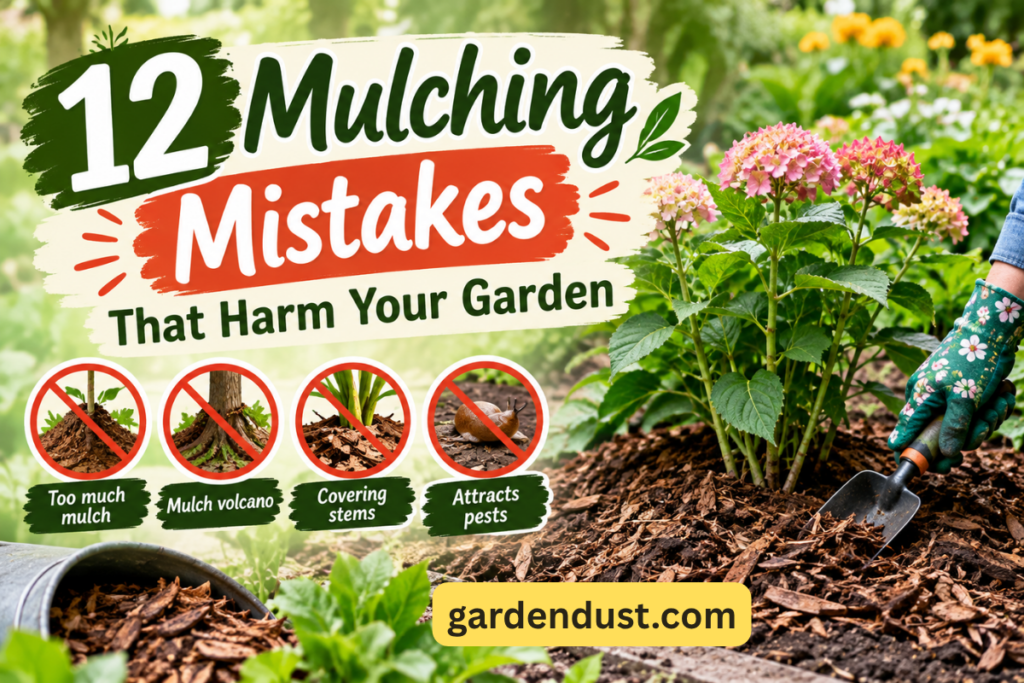
Before adding another layer to your garden beds, avoid these 12 mulching mistakes that can harm your garden.
1. Applying Too Much Mulch
One of the most common mulching mistakes is simply using too much.
A thick layer may seem like it will provide better weed control, but excessive mulch can prevent water and oxygen from reaching the soil properly. It can also keep the soil excessively wet around plant roots.
For most garden beds, a layer of around 2 to 4 inches is usually enough, depending on the type of mulch.
Before adding fresh mulch, check how much is already there. You may only need to fluff or replace a thin top layer rather than piling on more every year.
2. Creating a “Mulch Volcano” Around Trees
Piling mulch high against the trunk of a tree is often called a mulch volcano, and it is one of the worst ways to mulch.
Mulch should never be piled against the trunk. Constant moisture around the bark can encourage rot and disease. Thick mulch can also create hiding places for insects and rodents.
Instead, spread mulch in a wide, even layer around the tree while leaving a clear gap around the trunk.
Think of it like a donut—not a volcano.
READ ALSO:-The Benefits of Mulching
3. Covering Plant Stems and Crowns
The same rule applies to flowers, shrubs, and vegetables.
Mulch pressed directly against stems can trap moisture and reduce air circulation. This creates conditions that may encourage stem rot and fungal problems.
Keep mulch slightly away from the base of plants, especially plants with sensitive crowns.
Always leave a small amount of open space around stems so the plant base can stay dry and receive adequate airflow.
4. Using Fresh Wood Chips in the Wrong Place
Fresh wood chips can be useful in some areas of the garden, especially around trees and pathways. However, using them incorrectly in vegetable beds or mixing large amounts into the soil can cause problems.
As woody materials decompose, microorganisms use nitrogen during the breakdown process. This can temporarily reduce nitrogen available to nearby plants, particularly when fresh material is mixed directly into the soil.
If you want to use wood chips, keep them mainly on the soil surface and avoid mixing them deeply into planting beds.
5. Using Mulch That Is Too Fine
Very fine mulch can become compacted over time.
When mulch forms a dense layer, water may run off instead of soaking into the soil. Air movement can also be reduced, creating poor conditions around plant roots.
Fine materials may work well when applied in a thin layer, but avoid creating a thick, dense mat.
If your mulch begins to form a crust, gently loosen it with a rake.
6. Forgetting to Remove Old, Matted Mulch
Old mulch does not always need to be completely removed, but it should be checked regularly.
Over time, organic mulch can become compacted and matted. When this happens, water and air may have difficulty reaching the soil.
Before adding new mulch, inspect the old layer. If it is heavily compacted, gently rake and loosen it.
In some cases, removing part of the old mulch may be necessary before adding fresh material.
7. Using Weed-Contaminated Mulch
Not all mulch is created equal.
Grass clippings, straw, hay, and other organic materials may contain weed seeds if they come from an unreliable source. Spreading them around your garden can accidentally introduce more weeds instead of suppressing them.
Choose clean, weed-free mulch whenever possible.
If using grass clippings, make sure they are from a healthy lawn and have not been contaminated with unwanted plant material.
8. Mulching Before the Soil Warms Up
Mulch helps regulate soil temperature, which is useful during hot summer weather.
However, applying a thick layer too early in spring can keep the soil cool for longer. This may slow seed germination and delay the growth of warm-season plants.
Allow the soil to warm before applying a heavy layer of mulch around heat-loving vegetables and annual flowers.
Once temperatures are consistently warmer, mulch can help conserve moisture and protect the soil.
9. Choosing the Wrong Mulch for Vegetable Gardens
Some decorative mulches look beautiful but are not the best choice for every garden.
Vegetable gardens often benefit from organic mulches that break down over time and contribute organic matter to the soil. Straw, shredded leaves, compost, and other suitable organic materials can work well.
Avoid choosing mulch based only on appearance. Consider how it affects soil moisture, temperature, and plant growth.
The best mulch for a vegetable garden may be different from the best mulch for shrubs or ornamental flower beds.
10. Using Diseased Plant Material as Mulch
It can be tempting to recycle every plant cutting back into the garden.
However, leaves, stems, or plant debris affected by disease may carry pathogens. Using infected material as mulch can potentially spread problems to healthy plants.
Avoid using clearly diseased plant material around your garden.
When in doubt, remove infected debris and keep it separate from healthy composting materials.
11. Letting Mulch Become Too Dry
Mulch is often used to conserve moisture, but the mulch itself can become extremely dry.
Some dry organic mulches may repel water temporarily, causing rainfall or irrigation to run off instead of soaking into the soil.
If water is not penetrating, gently rake the mulch and water slowly so moisture can move through the layer and into the soil below.
Always check the soil underneath the mulch rather than assuming your plants are receiving enough water.
12. Forgetting to Check for Pests
Mulch creates a cool, protected environment, which can sometimes attract unwanted visitors.
Slugs, snails, rodents, and other pests may hide beneath thick layers of mulch.
This does not mean you should avoid mulch completely. Instead, check underneath it regularly and avoid creating excessively thick layers near vulnerable plants.
Keeping mulch away from stems and maintaining proper thickness can help reduce pest problems.
How to Mulch Your Garden the Right Way
Mulching correctly is simple once you know the basics.
Start by removing large weeds and watering the soil if it is dry. Spread mulch evenly over the soil surface and maintain an appropriate depth for the material you are using.
Keep mulch away from:
- Tree trunks
- Plant stems
- Plant crowns
- Vegetable stems
Check your mulch a few times throughout the growing season. Fluff compacted areas, watch for pests, and add more only when the layer becomes too thin.
Organic mulches will gradually break down, which is often beneficial because they can contribute organic matter to the soil.
Final Thoughts
Mulch can make your garden healthier, easier to maintain, and more attractive—but more mulch is not always better. The biggest mistakes are usually applying mulch too thickly, piling it against plant stems, using contaminated materials, and failing to check old mulch regularly.
By applying the right amount and choosing the right material for your plants, you can enjoy the benefits of mulch without accidentally creating conditions that harm your garden. A few inches of properly placed mulch can protect your soil and plants. Just remember: keep it light, keep it loose, and keep it away from the stems. Happy Gardening…