Pruning a Peace Lily can help keep it looking neat, healthy, and attractive. But cutting the wrong part of the plant can slow its growth, reduce flowering, and leave it looking sparse.
Peace Lilies naturally shed old leaves and flowers over time, so some pruning is beneficial. However, not every yellowing, green, or unusual-looking part should be removed immediately.
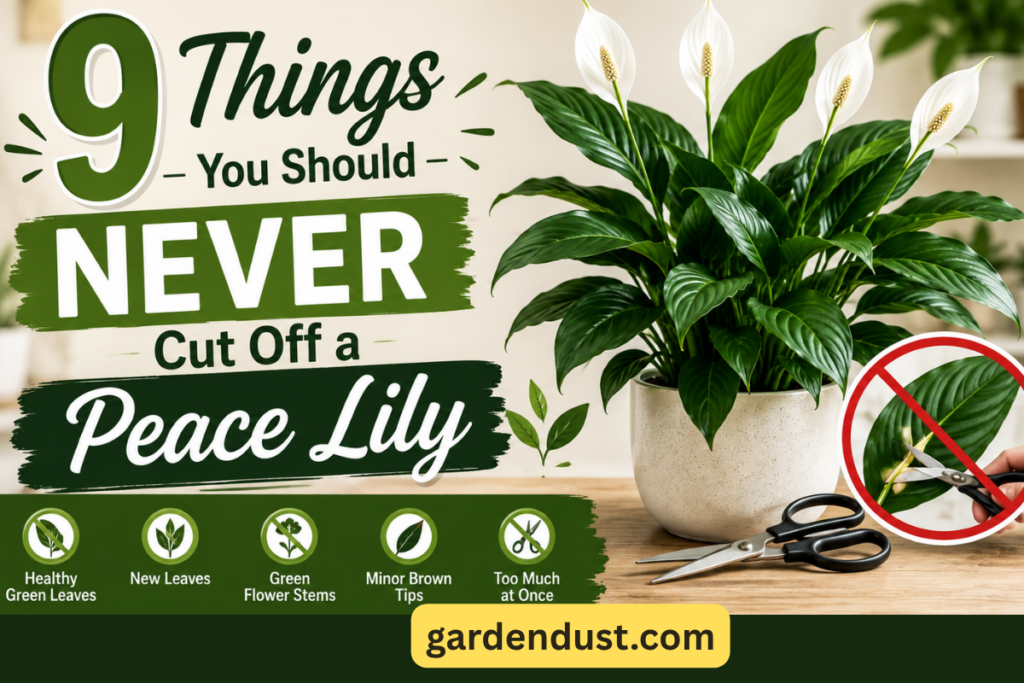
Before reaching for your scissors, here are 9 things you should never cut off a Peace Lily—or should only remove under the right conditions.
1. Healthy Green Leaves
Healthy green leaves are essential for your Peace Lily. They absorb light and help the plant produce the energy it needs to grow and flower.
Avoid removing green leaves simply because they are large or making the plant look full. Cutting too many healthy leaves at once can weaken the plant and slow down new growth.
If you need to improve the plant’s shape, remove only damaged or unhealthy growth and leave as many healthy leaves as possible.
2. New Leaves That Haven’t Fully Opened
Peace Lily leaves often emerge tightly rolled before gradually opening. It can be tempting to remove a curled or narrow leaf because it looks unusual, but this is usually completely normal.
Never cut off a new leaf simply because it has not opened yet.
Give it time to unfurl. Cutting new growth removes future leaves before they have a chance to support the plant.
If a developing leaf becomes brown, mushy, or severely damaged, investigate the underlying cause before removing it.
READ ALSO:-How to Save a Dying Peace Lily (Spathiphyllum): 8-Steps
3. Green Flower Stems
After a Peace Lily blooms, the flower may eventually fade, but the stem can remain green for some time.
Avoid cutting a healthy green flower stem too early. Let the bloom naturally age and begin to fade before pruning it.
Once the flower and stem have turned brown or yellow, you can remove the entire stalk close to the base using clean, sharp scissors or pruning shears.
4. Slightly Discolored Leaves Without Checking the Cause
A leaf with a small yellow spot or brown edge does not always need to be removed.
Before cutting it off, check for possible causes such as inconsistent watering, direct sunlight, low humidity, or fertilizer buildup.
If most of the leaf is still green and healthy, it can continue helping the plant produce energy. Removing every slightly damaged leaf can leave your Peace Lily with very little foliage.
Instead, correct the care problem first and monitor the plant.
5. Leaves With Only Brown Tips
Brown tips are common on Peace Lilies and can be caused by dry air, inconsistent watering, minerals in water, or excess fertilizer.
You do not always need to remove the entire leaf.
If the rest of the leaf is green and healthy, you can leave it alone or carefully trim only the brown portion while following the natural shape of the leaf.
Removing the entire leaf is usually unnecessary.
6. Young Leaves Near the Center of the Plant
New growth usually appears from the center or crown of a Peace Lily. These young leaves are important for replacing older foliage and keeping the plant full.
Avoid cutting small, developing leaves near the center just to make the plant look more symmetrical.
Removing too much new growth can slow recovery and leave gaps in the plant.
Always identify whether a small leaf is new growth before pruning.
READ ALSO:-10 Common Problems With Peace Lily Plant
7. Leaves That Are Drooping From Temporary Thirst
Peace Lilies are famous for dramatically drooping when they need water. A thirsty plant may suddenly look unhealthy, but the leaves can often recover quickly after proper watering.
Do not cut off drooping leaves immediately.
Check the soil first. If the top layer feels dry, water the plant thoroughly and allow excess water to drain away. Healthy leaves may become upright again after the plant rehydrates.
Only remove a leaf if it remains severely damaged or continues to decline.
8. A Leaf With Minor Pest Damage
Small holes, marks, or minor discoloration do not always mean the entire leaf needs to be removed.
First, inspect the plant for pests and check the undersides of leaves and stems. Treat the underlying pest problem before deciding how much foliage to remove.
A mostly healthy leaf can still help the plant grow.
However, if a leaf is heavily infested or severely damaged, removing it may be helpful to prevent pests from spreading.
9. Too Many Leaves at One Time
Technically, this is not one part of the plant—but it is one of the biggest pruning mistakes Peace Lily owners make.
Never remove a large amount of healthy foliage all at once.
Heavy pruning can stress the plant and reduce its ability to produce energy. If your Peace Lily needs significant cleanup, remove only the dead, yellow, brown, or severely damaged leaves first.
Give the plant time to recover before making additional cuts.
What Should You Cut Off a Peace Lily?
Knowing what not to remove makes pruning much easier. In general, you can safely prune:
- Completely yellow or brown leaves
- Dead or mushy leaves
- Severely damaged foliage
- Spent flowers that have faded
- Brown flower stalks
When removing a leaf or flower stalk, cut it as close to the base as possible without damaging nearby stems or new growth.
Always use clean, sharp scissors or pruning shears. Cleaning your tools before pruning helps reduce the risk of spreading plant diseases.
How Often Should You Prune a Peace Lily?
Peace Lilies do not require heavy or frequent pruning.
Instead of following a strict schedule, inspect your plant regularly and remove dead or damaged growth when needed. Light cleanup throughout the year is usually better than cutting back large amounts of foliage at once.
Most pruning is simply maintenance: removing old leaves and spent flowers so the plant can direct its energy toward healthy growth.
Final Thoughts
The biggest mistake when pruning a Peace Lily is assuming that every imperfect leaf needs to be removed. Healthy green leaves, new growth, temporarily drooping leaves, and leaves with minor brown tips can often remain on the plant. Before cutting anything, take a moment to identify why the leaf looks unusual. Focus on removing growth that is completely dead, severely damaged, or clearly declining. With careful pruning and proper care, your Peace Lily can stay full, healthy, and attractive for years. Happy Gardening…