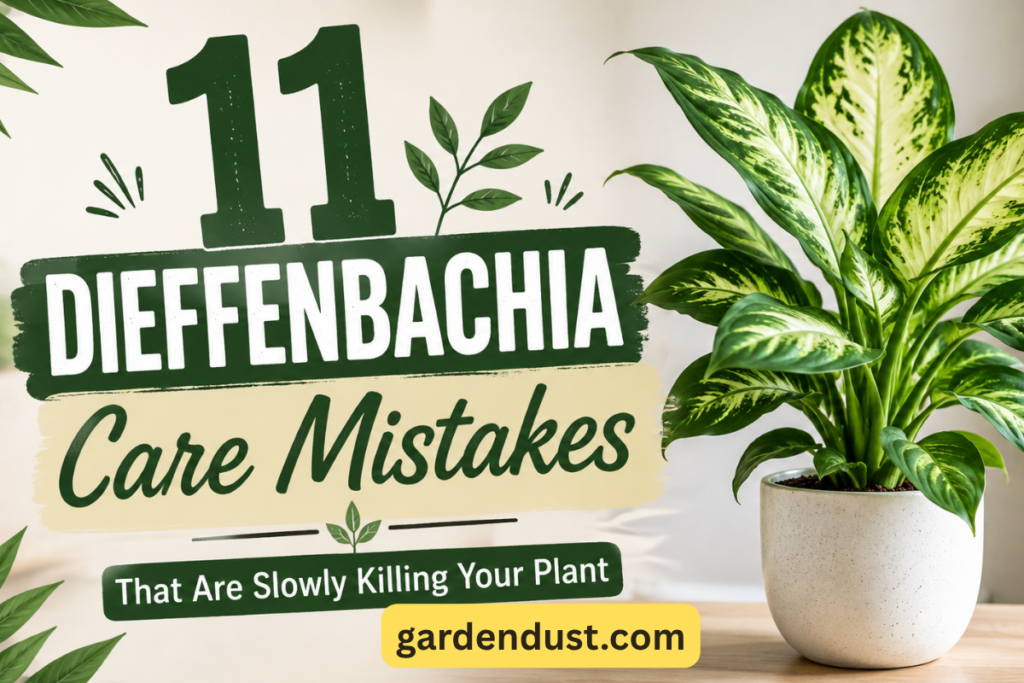
Dieffenbachia, also known as dumb cane, is a popular houseplant loved for its large, tropical leaves and striking patterns. While it is generally easy to grow, a few common care mistakes can quickly lead to yellow leaves, drooping stems, brown edges, or even a dying plant.
If your Dieffenbachia is struggling, one of these common mistakes may be the reason.
1. Keeping Your Dieffenbachia in Direct Sunlight
Dieffenbachia prefers bright, indirect light. Too much direct sunlight can scorch its beautiful leaves, causing brown, dry patches and faded coloring.
Place your plant near a bright window where it receives filtered light. If the sun shines directly through the window, use a sheer curtain or move the plant slightly farther away.
Tip: If the leaves look bleached or develop crispy brown spots, too much sun may be the problem.
2. Growing It in Very Low Light
Although Dieffenbachia can tolerate lower light, it will not thrive in a dark corner for long. Insufficient light can slow growth, make stems weak, and cause the plant to lose lower leaves.
Move it to a brighter location with indirect sunlight. Avoid placing it in complete shade.
3. Overwatering the Plant
Overwatering is one of the biggest mistakes Dieffenbachia owners make. Constantly wet soil can suffocate the roots and eventually lead to root rot.
Instead of watering on a strict schedule, check the soil first. Water when the top layer of soil feels dry.
Signs of overwatering include:
- Yellowing leaves
- Drooping growth
- Soft stems
- Wet soil that stays damp for too long
- A sour smell coming from the pot
Always make sure excess water can drain freely from the container.
READ ALSO:-Why Are My Dieffenbachia Leaves Drooping?
4. Letting the Soil Become Completely Dry
While overwatering is dangerous, allowing a Dieffenbachia to remain dry for too long can also cause problems. The leaves may droop, curl, or develop crispy brown edges.
Dieffenbachia prefers soil that stays lightly and evenly moist, but never soggy.
If your plant repeatedly wilts between waterings, check whether the soil is drying out too quickly.
5. Using a Pot Without Drainage Holes
A decorative pot without drainage may look attractive, but it can slowly kill your Dieffenbachia.
Water collects at the bottom of the pot and keeps the roots constantly wet. This creates ideal conditions for root rot.
Choose a container with drainage holes and use a saucer underneath to protect your furniture.
6. Using Heavy, Poorly Draining Soil
Dense garden soil or compacted potting soil can hold too much water around the roots.
Dieffenbachia grows best in a loose, well-draining houseplant mix. The soil should retain some moisture while allowing excess water and air to move through easily.
If your soil stays wet for many days after watering, it may be time to repot the plant into a lighter mix.
7. Exposing It to Cold Temperatures
Dieffenbachia is a tropical plant and does not tolerate cold conditions well.
Cold drafts from windows, doors, or air conditioners can cause yellowing leaves, leaf drop, and slow growth.
Keep the plant in a consistently warm indoor environment and away from sudden temperature changes.
8. Ignoring Low Humidity
Dry indoor air can cause Dieffenbachia leaves to develop brown tips or edges.
While the plant can adapt to average household humidity, extremely dry air may affect its appearance and growth.
You can improve humidity by placing the plant near other houseplants or using a humidifier. Avoid placing it directly beside heating vents or air conditioners.
9. Fertilizing Too Much
More fertilizer does not mean faster or healthier growth.
Overfertilizing can cause fertilizer salts to build up in the soil, damaging the roots and causing brown leaf edges.
Feed your Dieffenbachia moderately during its active growing season. If you notice white crust on the soil or pot, flush the soil with water and reduce fertilizing.
10. Ignoring Pests
Small pests can slowly weaken your Dieffenbachia if they are not noticed early.
Common houseplant pests include:
- Spider mites
- Mealybugs
- Scale insects
Check both sides of the leaves and along the stems regularly. Sticky residue, tiny webbing, white cotton-like spots, or unusual discoloration may indicate a pest problem.
Catching pests early makes them much easier to control.
11. Repotting Too Often—or Not Often Enough
Repotting a Dieffenbachia too frequently can stress its roots, while leaving a severely root-bound plant in the same pot can restrict growth.
Signs your Dieffenbachia may need repotting include roots growing through drainage holes, water running straight through the pot, or unusually slow growth.
When repotting, choose a container only slightly larger than the current one. A pot that is too large can hold excess moisture and increase the risk of root problems.
Final Thoughts
Most Dieffenbachia problems come down to a few basic issues: too much water, poor drainage, incorrect lighting, or unsuitable temperatures. The good news is that these problems are usually easy to correct once you identify the cause. Give your Dieffenbachia bright indirect light, water it carefully, use well-draining soil, and keep it away from cold drafts. With a few simple adjustments, your Dieffenbachia can recover and continue producing the large, beautiful leaves that make this houseplant so popular. Happy Gardening…