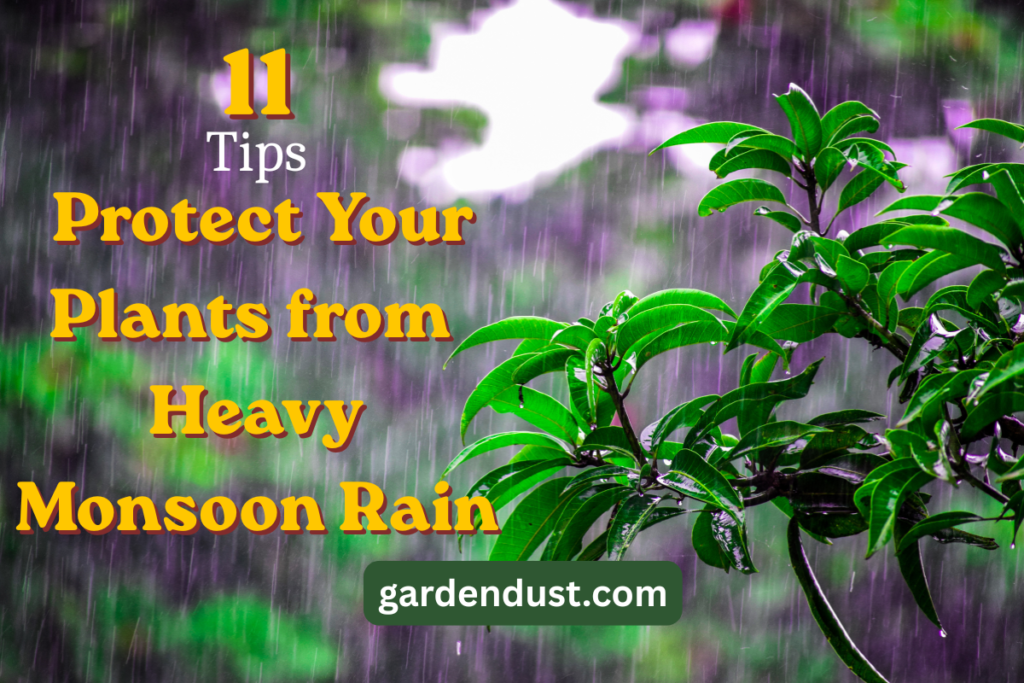
The monsoon brings much-needed water and cooler temperatures to the garden, but heavy rainfall can also create serious problems for plants. Excess water can lead to waterlogging, root rot, fungal diseases, broken stems, soil erosion, and nutrient loss.
With a few simple precautions, you can protect your plants and help them thrive throughout the rainy season. Here are the best ways to protect your garden from heavy monsoon rain.
1. Improve Soil Drainage
One of the most important steps in monsoon gardening is ensuring that excess water can drain away quickly. Water that remains around plant roots for too long can reduce oxygen in the soil and cause root rot.
Before heavy rains begin:
- Loosen compacted soil around plants.
- Add compost or other organic matter to improve soil structure.
- Avoid creating low spots where rainwater collects.
- Make sure garden beds have proper drainage.
For container plants, use pots with drainage holes. Never allow pots to remain in trays filled with stagnant rainwater for long periods.
2. Move Container Plants to a Sheltered Location
Potted plants are especially vulnerable to heavy rain because their containers can quickly become waterlogged. During periods of continuous rainfall, move sensitive plants to a covered balcony, verandah, greenhouse, or another location that receives bright but indirect light.
Plants that may need protection include:
- Succulents and cacti
- Indoor plants
- Herbs such as rosemary and thyme
- Plants with delicate flowers
- Newly propagated cuttings
- Seedlings
However, avoid keeping plants in completely dark areas for extended periods. They still need sufficient light and air circulation.
3. Check Your Pots and Drainage Holes
Heavy rain can wash soil out of containers and block drainage holes. Regularly check your pots during the monsoon.
Make sure:
- Drainage holes are not blocked.
- Water is flowing freely from the bottom.
- Soil has not become compacted.
- The pot is not standing directly on a flat surface that prevents drainage.
You can place containers on pot feet, bricks, or stands to improve airflow and drainage underneath.
4. Protect Plants from Strong Winds
Monsoon storms often bring strong winds along with heavy rain. Tall plants, young trees, and plants with weak stems may bend or break.
Use bamboo sticks, wooden stakes, or other suitable supports to secure:
- Tall flowering plants
- Tomato and chilli plants
- Young saplings
- Climbing plants
- Plants with heavy foliage
Tie stems loosely using soft garden ties. Avoid using thin wire or tight strings, as they can damage the stems.
5. Use Mulch Carefully
Mulching can help prevent soil erosion during heavy rainfall, but excessive or poorly placed mulch can trap moisture around the plant stem.
Apply a thin layer of organic mulch such as:
- Dry leaves
- Compost
- Straw
- Coco coir
Keep the mulch a few centimetres away from the main stem or trunk. This helps prevent excessive moisture and reduces the risk of fungal problems.
6. Protect the Soil from Erosion
Heavy rain can wash away the topsoil, exposing plant roots and removing valuable nutrients. This is especially common in sloping gardens and containers.
To reduce soil erosion:
- Add mulch to exposed soil.
- Grow ground-cover plants.
- Use edging around garden beds.
- Avoid leaving large areas of bare soil.
- Cover exposed roots with a thin layer of soil and compost.
If roots become exposed after a storm, gently cover them with suitable soil. Do not compact the soil tightly around the plant.
7. Avoid Overwatering During the Monsoon
One of the most common mistakes gardeners make during the rainy season is continuing their normal watering schedule.
Before watering, check the soil with your finger. If the top layer is still moist, wait until it begins to dry.
Overwatering can cause:
- Yellowing leaves
- Root rot
- Wilting despite wet soil
- Fungal diseases
- Poor plant growth
Remember that rainfall is already providing water to your plants. Your watering schedule should be adjusted according to the amount of rain your garden receives.
8. Remove Damaged and Diseased Leaves
Heavy rain can damage leaves, break branches, and create conditions that encourage fungal diseases. Inspect your plants regularly after storms.
Remove:
- Severely damaged leaves
- Rotten foliage
- Broken branches
- Yellowing leaves caused by disease
- Fallen plant material that is decaying
Always use clean pruning tools when cutting diseased plant parts. Dispose of infected material instead of adding it to a compost pile.
9. Improve Air Circulation
High humidity and wet foliage create ideal conditions for fungal infections. Good air circulation helps plants dry faster after rainfall.
Avoid overcrowding plants. Prune excessive growth where necessary and maintain enough space between plants.
If possible, place container plants where they receive good airflow. Avoid keeping wet plants in enclosed corners with little ventilation.
10. Protect Young Seedlings
Young seedlings are particularly vulnerable to heavy rain. Strong rainfall can wash away soil, bend delicate stems, or completely uproot small plants.
You can protect seedlings by:
- Using a temporary transparent cover
- Placing them under a roof or shade structure
- Creating a simple rain shelter
- Using a fine mesh or protective covering
Make sure any cover allows adequate airflow and light. Do not completely seal seedlings in a humid, poorly ventilated space.
11. Check for Pests After Heavy Rain
Monsoon conditions can increase the appearance of certain pests, including slugs, snails, caterpillars, and fungal-related problems.
Inspect the undersides of leaves and the soil around plants. Remove pests manually where possible and maintain good garden hygiene.
Avoid allowing fallen leaves and rotting plant material to accumulate around plants, as these can create hiding places for pests.
Bonus Tip- Inspect Your Garden After Every Major Storm
A quick inspection after heavy rain can prevent small problems from becoming serious.
Check for:
Blocked drainage
- Standing water
- Fallen or broken plants
- Exposed roots
- Soil erosion
- Damaged containers
- Signs of fungal disease
The sooner you identify a problem, the easier it is to correct.
Final Thoughts
Heavy monsoon rain can be challenging for gardeners, but it does not have to damage your plants. Good drainage, proper support, protection from excessive rainfall, regular inspections, and careful watering are the keys to maintaining a healthy monsoon garden.
Remember, the goal is not to completely protect plants from rain. Instead, it is to help excess water drain away, prevent waterlogging, protect delicate plants, and maintain good airflow. With the right preparation, the monsoon can become one of the most productive and beautiful seasons in your garden. Happy Gardening….