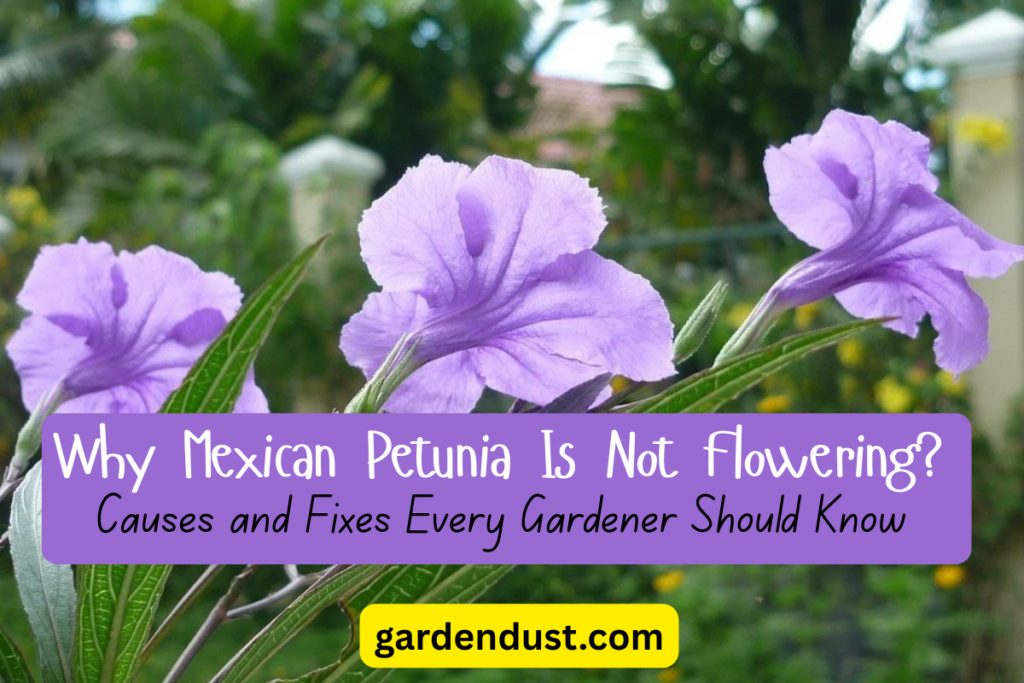
Mexican petunias (Ruellia simplex), with their striking trumpet-shaped blooms and vigorous growth, are a favorite among home gardeners who want color with minimal effort. These hardy perennials bloom generously in the right conditions, offering continuous purple, pink, or white flowers through the warm months. That’s why when a Mexican petunia stops flowering, it can feel confusing—especially because this plant is usually such a reliable bloomer.
If you’re noticing plenty of green foliage but not a single flower in sight, you’re not alone. There are several reasons why Mexican petunias hold back their blooms, and most of them can be corrected with simple adjustments. In this article , we’ll take a deep and detailed look into why Mexican petunias fail to bloom and what you can do to bring them back to life. Let’s begin…
Understanding Why Flowering Stops
Flowering is a high-energy task for any plant. Even though Mexican petunias are hardy and adaptable, they too need the right environmental and soil conditions to produce blooms. When something is off—whether it’s sunlight, nutrients, water, or temperature—the plant shifts its energy from blooming to basic survival.
Let’s explore the major reasons your Mexican petunia may not be flowering and how you can fix each one effectively.
1. Lack of Adequate Sunlight
Mexican petunias may tolerate some shade, but they are fundamentally sun-loving plants. Sunlight directly affects how much energy the plant can generate through photosynthesis. Without enough energy, blooms are the first thing your plant sacrifices.
How Low Light Affects Blooming
- In full shade, stems grow tall and leggy.
- Leaves appear healthy but buds never form.
- The plant focuses on stretching toward light instead of producing flowers.
Many gardeners unknowingly plant Mexican petunias near walls, under large trees, or beside tall shrubs. As nearby plants grow, the shade increases, and the Mexican petunia receives fewer hours of direct light.
How to Fix It
Move or replant your Mexican petunia to a location where it receives at least 6 hours of direct sunlight daily. Container-grown plants can simply be relocated to a sunny patio or south-facing space.
2. Too Much Nitrogen and Not Enough Phosphorus
Soil nutrition plays a major role in flowering. While these plants don’t require heavy feeding, they bloom best when nutrients are balanced.
What Too Much Nitrogen Does
Excess nitrogen (N) encourages lush leaf and stem growth—but it suppresses flowering. Many all-purpose fertilizers or manure-rich composts are high in nitrogen, which results in:
- Big plants
- Lots of leaves
- Few or no flowers
What Low Phosphorus Does
Phosphorus (P) supports:
- Root development
- Bud formation
- Overall bloom production
Low levels of phosphorus can prevent the plant from setting buds, even if the foliage looks healthy.
How to Fix It
Use a fertilizer with a higher phosphorus ratio such as:
- 5-10-5
- 10-20-10
- Bloom booster mixes
Apply lightly every 4–6 weeks during the growing season. Avoid overfeeding—Mexican petunias prefer moderation.
3. Irregular Watering or Poor Soil Drainage
Mexican petunias are drought tolerant once established, but inconsistent watering still affects bloom production.
When Plants Don’t Get Enough Water
- Soil becomes too dry
- Buds drop before opening
- The plant conserves energy instead of blooming
When Plants Get Too Much Water
- Roots suffocate
- Nutrient uptake slows down
- Root rot may develop
- The plant becomes stressed and stops blooming
How to Fix It
- Water deeply once or twice a week, depending on climate.
- Ensure soil stays evenly moist but never soggy.
- Improve drainage by adding sand, perlite, or compost to heavy clay soil.
- Always choose containers with proper drainage holes.
4. Temperature Fluctuations and Weather Stress
Mexican petunias flourish in warm weather, ideally between 18°C to 32°C (65°F to 90°F). Extreme temperatures—both hot and cold—can halt flowering.
Cold Stress
- Sudden temperature drops can shock the plant
- New growth slows
- Flowering pauses until warm weather returns
Heat Stress
- Prolonged extreme heat can dry out the plant
- Buds may wilt before opening
How to Fix It
- Provide light afternoon shade in extremely hot climates.
- Mulch soil to maintain stable temperatures.
- Protect young plants during unexpected cold spells.
5. Overcrowding and Root Competition
Mexican petunias spread vigorously through rhizomes. Without space, the plant becomes overcrowded, reducing its ability to flower.
How Overcrowding Affects Blooming
- Plants compete for sunlight
- Air circulation decreases
- Nutrients become insufficient for multiple stems
- Inner stems become weak and produce few blooms
How to Fix It
- Divide clumps every 2–3 years.
- Thin out dense growth to allow more airflow.
- Replant the divided sections in sunny, nutrient-rich soil.
6. Soil pH Imbalance
Soil pH affects nutrient availability. Mexican petunias prefer slightly acidic to neutral soil with a pH of 6.0 to 7.0.
When Soil Is Too Acidic or Too Alkaline
- Phosphorus becomes unavailable
- Nutrient uptake slows
- Leaves thrive but flowers don’t form
How to Fix It
- Test soil using a simple home pH kit.
- Add lime if soil is too acidic.
- Add sulfur, peat moss, or compost if soil is too alkaline.
- Aim for neutral soil for best flowering results.
7. Pest Infestations or Diseases
Even though Mexican petunias are hardy, they can still be affected by pests that suck plant juices and weaken growth.
Common Pests
- Aphids
- Whiteflies
- Spider mites
- Mealybugs
These insects feed on the plant’s sap, reducing energy available for blooms. You may notice sticky residue, yellowing leaves, or buds dropping early.
Common Diseases
- Powdery mildew
- Leaf spot
- Root rot (from overwatering)
How to Fix It
- Spray neem oil or insecticidal soap weekly until pests disappear.
- Improve airflow by thinning overcrowded stems.
- Avoid overhead watering to reduce fungal growth.
- Remove affected leaves and dispose of them properly.
8. Transplant Shock or Environmental Stress
Mexican petunias may stop flowering after:
- Being transplanted
- Being moved from one location to another
- Experiencing heavy pruning
- Sudden changes in watering or soil type
The plant redirects all its energy to recovery, temporarily pausing blooming.
How to Fix It
- Give newly transplanted plants 2–4 weeks to settle.
- Water lightly but consistently.
- Avoid pruning during the growing season unless necessary.
- Keep the environment stable.
9. Competition From Nearby Plants
Large shrubs, trees, or fast-growing perennials planted nearby may compete for:
- Water
- Nutrients
- Sunlight
- Root space
Mexican petunias may survive but produce fewer blooms when competing with stronger root systems.
How to Fix It
- Create a dedicated planting area with root barriers if needed.
- Move the plant away from aggressive shade trees.
- Grow in containers or raised beds to reduce competition.
10. Age of the Plant
Age influences blooming in two ways:
Young Plants
Seed-grown or freshly propagated plants may take time to mature. In their first season, they often focus on root and foliage development before flowering reliably.
Old Plants
Older, woody plants may bloom less because:
- Growth slows
- Stems become tough
- Nutrient absorption declines
How to Fix It
- For young plants, simply give them time.
- For old plants, cut back dead or woody stems in early spring to encourage fresh, blooming-friendly growth.
- Divide old clumps to rejuvenate them.
11. Lack of Deadheading or Natural Flower Drop
Unlike many flowers, Mexican petunias drop their blooms naturally each day. They bloom in the morning, and flowers fall by afternoon. Gardeners sometimes mistake this natural process for poor flowering.
But deadheading can still help.
Removing spent blooms and thinning heavy foliage encourages the plant to produce more buds.
Final Thoughts: Bringing Your Mexican Petunia Back to Full Bloom
Mexican petunias are resilient, rewarding plants that can bloom profusely when their basic needs are met. If yours is not flowering, the cause usually lies in one of these areas:
- Not enough sunlight
- Nutrient imbalance
- Improper watering
- Temperature stress
- Overcrowding
- Soil pH issues
- Pests or diseases
- Environmental shock
- Competition from nearby plants
- Age of the plant
By identifying what’s affecting your plant and making the right adjustments—whether it’s moving it to full sun, improving soil drainage, or balancing nutrients—you can bring your Mexican petunia back to life and enjoy a season filled with bright, beautiful blooms. Happy Gardening….