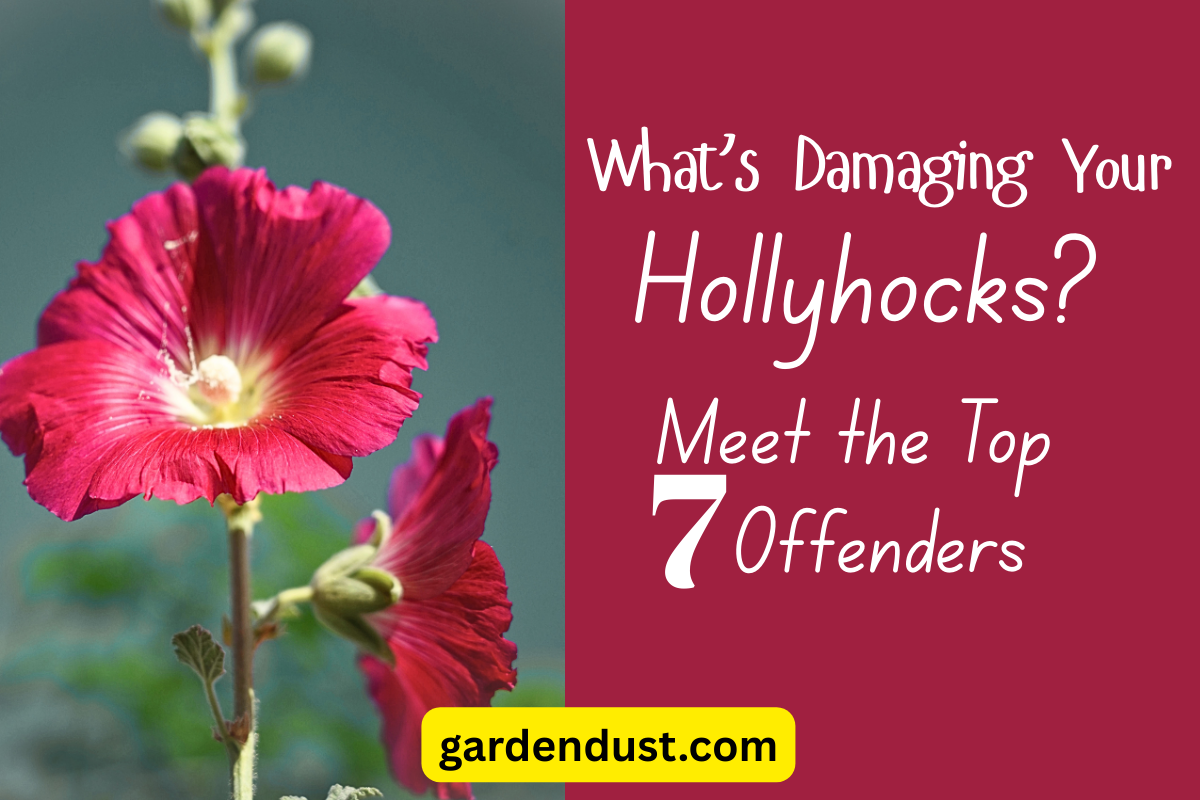
Hollyhocks, with their tall spikes and old-fashioned charm, are a favorite among cottage garden lovers. Their towering blooms in shades of pink, red, white, and yellow draw admiration from passersby and pollinators alike. However, if your hollyhocks suddenly start to look ragged or sickly, the problem is likely more than just weather or watering—it could be pests.
In this comprehensive guide, we’ll uncover the top 7 pests that commonly damage hollyhocks. You’ll learn how to identify each culprit, understand the signs of infestation, and take the right steps to protect your plants from further harm. Let’s begin….
1. Hollyhock Weevil (Rhopalapion longirostre)
The hollyhock weevil is a small, gray to brown beetle with an elongated snout, measuring around 2 to 3 mm long. Its larvae are white, legless grubs found inside hollyhock flower buds.
Damage:
Adults chew small holes in leaves, buds, and flowers, while the larvae bore into flower buds and feed on developing seeds. This dual attack causes distorted blooms and poor seed production.
Signs of Infestation:
- Tiny holes in flower buds and petals.
- Buds that drop prematurely or fail to open.
- Presence of small, grayish beetles.
Control Methods:
- Handpicking: Remove adult beetles early in the season.
- Neem oil: Apply neem oil spray to deter weevils and interrupt the life cycle.
- Sanitation: Clean up plant debris in fall to remove overwintering sites.
- Crop rotation: Avoid planting hollyhocks in the same location every year.
2. Japanese Beetles (Popillia japonica)
Japanese beetles are metallic green with bronze wing covers and are about 1/2 inch long. They are active during warm, sunny days, especially in mid-summer.
Damage:
These beetles skeletonize leaves, leaving only the veins behind. They also chew on flower petals, turning once-vibrant blooms into tattered messes.
Signs of Infestation:
- Shredded, lace-like leaves.
- Beetles visibly clustered on flowers or foliage.
- Sudden decline in plant appearance during mid-summer.
Control Methods:
- Handpicking: Drop beetles into soapy water early in the morning when they’re sluggish.
- Row covers: Use fine mesh covers during peak feeding times.
- Companion planting: Grow garlic, tansy, or chives nearby to repel them.
- Biological control: Introduce milky spore or beneficial nematodes to reduce larvae in the soil.
3. Aphids (Aphidoidea family)
Aphids are tiny (1–3 mm) soft-bodied insects that can be green, black, yellow, or gray. They typically cluster on young shoots, buds, and the undersides of leaves.
Damage:
These sap-sucking insects feed on the plant’s juices, leading to curled leaves, distorted growth, and a sticky residue known as honeydew that can attract sooty mold.
Signs of Infestation:
- Sticky leaves and stems.
- Distorted or stunted new growth.
- Visible colonies of aphids or presence of ants farming them.
Control Methods:
- Water spray: A strong jet of water can dislodge aphids.
- Neem or insecticidal soap: Apply regularly during early infestations.
- Introduce predators: Ladybugs, lacewings, and parasitic wasps are effective natural enemies.
- Avoid over-fertilizing: Excess nitrogen promotes soft growth that attracts aphids.
4. Spider Mites (Tetranychidae family)
Spider mites are nearly microscopic arachnids, reddish-brown or pale in color. A telltale sign of their presence is the fine webbing they produce on leaf surfaces.
Damage:
They suck the chlorophyll from plant cells, causing stippling (tiny yellow dots) and a general bronzing or speckled appearance of the leaves.
Signs of Infestation:
- Fine, silken webbing on leaves and stems.
- Speckled, yellowing leaves that may eventually drop.
- Mites visible under magnification or shaking leaves over white paper.
Control Methods:
- Water: Regular hosing can keep populations under control.
- Miticides or insecticidal soap: Use during early infestations.
- Humidity control: Mites thrive in dry conditions—mist plants or increase ambient humidity.
- Introduce predatory mites: Species like Phytoseiulus persimilis can be highly effective.
5. Cutworms (Noctuidae larvae)
Cutworms are the caterpillars of several species of night-flying moths. They are plump, smooth-skinned larvae, often brown or gray, and curl into a “C” shape when disturbed.
Damage:
They feed at night, cutting young seedlings off at the base or chewing irregular holes in older leaves and stems.
Signs of Infestation:
- Seedlings mysteriously falling over.
- Chewed leaf margins or stems near the soil line.
- Holes in lower leaves or leaf edges.
Control Methods:
- Collars: Use cardboard or tin foil collars around the base of plants.
- Evening inspections: Check and handpick at dusk or dawn.
- Beneficial nematodes: Apply to the soil to target larvae.
- Till the soil: Before planting to expose and destroy overwintering larvae.
6. Slugs and Snails
These mollusks are soft-bodied, slimy creatures with or without a shell. They are nocturnal and most active in damp conditions.
Damage:
Slugs and snails chew large, irregular holes in leaves and flowers. Seedlings and tender foliage are particularly vulnerable.
Signs of Infestation:
- Large ragged holes in leaves.
- Silvery slime trails on foliage and soil.
- Damage mostly occurring overnight or in cool, wet weather.
Control Methods:
- Slug traps: Bury shallow dishes of beer at soil level to lure and drown them.
- Barriers: Use copper tape or crushed eggshells to deter them.
- Handpicking: Remove at night with a flashlight.
- Diatomaceous earth: Sprinkle around plants to deter movement.
7. Leaf Miners
Leaf miners are larvae of various insects (flies, moths, beetles) that live inside and feed on leaf tissue. The adults are often tiny and go unnoticed.
Damage:
They create winding, white tunnels or blotches between the upper and lower leaf surfaces, reducing photosynthesis and aesthetic appeal.
Signs of Infestation:
- Serpentine or blotchy trails on leaves.
- Browning and curling of heavily mined leaves.
- Larvae visible within the leaf tissue when held to light.
Control Methods:
- Remove and destroy affected leaves: Prevents larvae from maturing.
- Floating row covers: Protect plants from egg-laying adults.
- Systemic insecticides: Use only as a last resort and according to label instructions.
- Sticky traps: Catch adult flies before they lay eggs.
Bonus Threat: Rust Fungus (Puccinia malvacearum)
While not an insect, rust disease is a major issue for hollyhock growers. The rust fungus thrives in moist, warm conditions and is easily spread by wind or water.
Symptoms:
- Orange to brown pustules on the undersides of leaves.
- Yellowing and premature leaf drop.
- Severely defoliated plants late in the season.
Prevention and Control:
- Air circulation: Space plants properly to reduce humidity.
- Watering: Avoid overhead watering; water at the base.
- Remove infected leaves: Prompt removal reduces spread.
- Fungicides: Use sulfur or copper-based fungicides if needed.
General Hollyhock Pest Prevention Tips
To reduce the risk of pest infestations, consider implementing these integrated pest management strategies:
1. Keep It Clean-Dead leaves, stems, and plant debris are breeding grounds for many pests. Regularly clean up around hollyhocks, especially at the end of the season.
2. Choose Resistant Varieties-Some modern hollyhock hybrids are bred for resistance to pests and diseases. Look for varieties labeled as rust-resistant or pest-tolerant.
3. Healthy Soil, Healthy Plants-Strong, well-nourished plants can better resist pest damage. Use compost and organic fertilizers to improve soil health and plant vigor.
4. Rotate Planting Locations-Avoid planting hollyhocks in the same spot year after year to prevent a build-up of soil-borne pests and diseases.
5. Observe Regularly-Early detection is crucial. Check your hollyhocks weekly—look under leaves, in buds, and along stems for signs of trouble.
When to Take Action
Not every pest problem requires aggressive treatment. In fact, a few holes here and there won’t harm your hollyhocks too much, especially later in the season. However, if your plants are being severely defoliated, not flowering well, or showing signs of stress, it’s time to step in.
Take a balanced approach—use natural methods and encourage beneficial insects before turning to chemicals. Holistic gardening leads to healthier plants and a more biodiverse backyard.
Final Thoughts
Hollyhocks may seem delicate, but they are resilient perennials that can thrive for years with the right care and a watchful eye. By identifying and managing the top seven pests—hollyhock weevils, Japanese beetles, aphids, spider mites, cutworms, slugs, and leaf miners—you can keep your garden colorful and pest-free all season long.
Remember, the key is consistent observation, prompt action, and creating an environment where your hollyhocks (and beneficial insects) can flourish. Whether you’re growing them against a fence or as a dramatic centerpiece in your flower bed, your hollyhocks deserve to bloom beautifully—without interference from these pesky offenders. Happy Gardening…