
Roses are the crown jewels of many gardens, celebrated for their beauty, fragrance, and timeless charm. But even the most majestic blooms can fall prey to uninvited guests. Insects are among the most common threats to healthy roses, and identifying them early is crucial for keeping your garden in full bloom. Whether you’re a novice or a seasoned gardener, knowing the enemy is the first step toward victory.
Below, we dive into six of the most common and destructive insect pests that may be damaging your roses, how to spot them, and what you can do to protect your prized plants.
No.1. Aphids (Aphidoidea)

Aphids are tiny, pear-shaped insects that cluster in large numbers on new rose growth—buds, stems, and leaves. They come in green, black, pink, yellow, and even white varieties. These soft-bodied insects are about 1/8 inch long and often have two short “tailpipes” (cornicles) extending from their hind ends.
Damage They Cause:
Aphids feed by sucking sap from rose tissue. This weakens the plant, stunts growth, and causes deformed leaves and flower buds. They also excrete a sticky substance called honeydew, which attracts ants and promotes the growth of black sooty mold on leaves.
READ DETAIL:- How To Plant Roses
Signs of Infestation:
- Curling, yellowing, or misshapen leaves
- Sticky residue on foliage
- Presence of ants
- Visible clusters of tiny bugs on new growth
How to Control Aphids:
- Manual removal: Spray aphids off with a strong jet of water.
- Beneficial insects: Encourage ladybugs, lacewings, and parasitic wasps that feed on aphids.
- Neem oil or insecticidal soap: These are effective for light to moderate infestations.
- Avoid over-fertilizing: Excess nitrogen promotes tender growth that attracts aphids.
No.2. Japanese Beetles (Popillia japonica)

Japanese beetles are about 1/2 inch long, with metallic green bodies and copper-colored wing covers. They have six legs and tiny white tufts along the sides of their abdomen. They’re typically active from late spring to mid-summer.
Damage They Cause:
Adult beetles feed on rose flowers and leaves, skeletonizing the foliage by eating between the veins. They can decimate entire rose bushes if left unchecked, chewing through petals and causing flowers to look ragged and unattractive.
Signs of Infestation:
- Skeletonized leaves (leaf veins left behind)
- Flowers with irregular holes
- Clusters of beetles feeding together, often in the heat of the day
How to Control Japanese Beetles:
- Hand-picking: Drop them into soapy water early in the morning when they are less active.
- Row covers: Use to protect roses during peak beetle season.
- Neem oil: Acts as a deterrent and reduces egg-laying.
- Grub control: Apply beneficial nematodes or milky spore to reduce the larvae population in the soil.
No.3. Thrips (Thysanoptera)

Thrips are slender, tiny insects measuring about 1/25 inch long. They are difficult to spot with the naked eye but can appear as dark, needle-like specks on petals and leaves. They tend to hide inside flower buds or between leaves and petals.
Damage They Cause:
Thrips feed by scraping and piercing plant tissue, causing streaks, silvery scars, or brown patches on flower petals and leaves. They are especially problematic in light-colored rose varieties, where their feeding damage is most visible.
Signs of Infestation:
- Discolored or streaked rose petals
- Flower buds that fail to open properly
- Silvery or bronze-colored patches on leaves
- Deformed or curled blooms
How to Control Thrips:
- Prune affected buds and flowers: Dispose of them to reduce populations.
- Blue or yellow sticky traps: Help monitor and reduce thrip numbers.
- Insecticidal soap or neem oil: Apply directly into the blooms and foliage.
- Introduce predatory insects: Such as minute pirate bugs and predatory mites.
No.4. Rose Slugs (Sawfly Larvae)

Despite their name, rose slugs are not true slugs—they are the larval form of sawflies. These green, translucent, caterpillar-like larvae are around 1/2 inch long and are often found feeding on the undersides of rose leaves.
Damage They Cause:
Rose slugs skeletonize leaves by chewing the soft parts between the veins, eventually leaving only a lace-like structure behind. Heavy infestations can lead to complete defoliation of rose bushes.
Signs of Infestation:
- Skeletonized or windowpane-like damage on leaves
- Leaf edges turning brown and curling
- Visible green larvae on the underside of leaves
How to Control Rose Slugs:
- Hand-picking: Remove and squish larvae early in the morning.
- Strong water spray: Wash them off the plant.
- Horticultural oil or insecticidal soap: Effective against young larvae.
- Spinosad or pyrethrin sprays: For severe infestations.
No.5. Spider Mites (Tetranychidae)

Spider mites are minute arachnids, about the size of a grain of pepper, and are often red or brown. They typically inhabit the undersides of leaves and produce fine, silky webs. They thrive in hot, dry weather.
Damage They Cause:
Spider mites suck sap from leaf tissues, causing a stippled or speckled appearance. In severe infestations, leaves turn yellow, dry out, and drop off. Webbing may be visible on leaves and between stems.
Signs of Infestation:
- Tiny yellow or white speckles on leaves
- Fine webbing, especially under leaves
- Leaf discoloration and drop
- General decline in plant vigor
How to Control Spider Mites:
- Spray with water: Blast leaves with water to knock mites off.
- Neem oil or insecticidal soap: Spray thoroughly, especially on the underside of leaves.
- Predatory mites or ladybugs: These natural predators feed on spider mites.
- Keep plants well-watered: Mites prefer dry, dusty conditions.
No.6. Leafcutter Bees (Megachilidae)
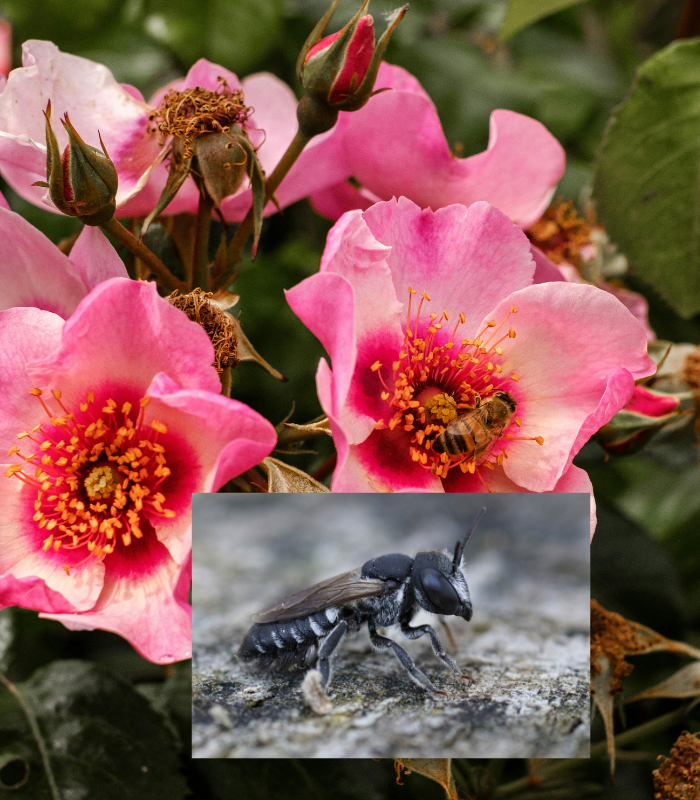
Leafcutter bees are solitary, non-aggressive bees about the size of honeybees. They are excellent pollinators but are also known for cutting neat, semi-circular pieces from the edges of rose leaves to use in their nests.
Damage They Cause:
While leafcutter bees don’t feed on the plant, the damage caused by their leaf-cutting can be unsightly. However, they do not pose a serious threat to the plant’s health.
Signs of Infestation:
- Neat, round or oval cut-outs on the edges of leaves
- No visible insects (since they are quick workers and non-aggressive)
- No discoloration or wilting—just cosmetic damage
How to Control Leafcutter Bees:
- Tolerance: Since damage is mostly cosmetic, it’s best to leave them alone.
- Physical barriers: Use mesh netting if the aesthetic damage is bothersome.
- Avoid insecticides: These bees are important pollinators and should not be harmed.
Integrated Pest Management (IPM) Tips for Rose Gardeners
While each insect requires specific actions, there are general principles you can follow to reduce pest pressure and encourage rose health:
1. Regular Inspection -Monitor your roses frequently for early signs of insect damage. The earlier you catch a pest, the easier it is to manage.
2. Healthy Soil, Healthy Plants-Feed your roses with balanced fertilizers, compost, and organic matter. Healthy roses are more resilient to pests.
3. Water Wisely-Water roses at the base rather than overhead to prevent fungal issues that attract pests. Morning watering is ideal.
4. Cleanliness Matters-Remove fallen leaves and spent flowers. Dead plant material can harbor pests and their eggs.
5. Encourage Beneficial Insects-Plant companion flowers like yarrow, dill, or fennel to attract ladybugs, lacewings, and hoverflies.
6. Rotate Treatments-If you must use insecticides, rotate products to avoid resistance buildup. Always follow label instructions.
When to Seek Help
If you’ve tried various home methods and pests persist, it may be time to consult a local extension service or certified horticulturist. They can provide tailored advice, identify pests accurately, and recommend region-specific treatments.
Final Thoughts
Rose gardening is a labor of love, and while insect pests can be a nuisance—or even a disaster—they don’t have to ruin your joy. Armed with knowledge about these 6-common rose-damaging insects, you’re better prepared to fight back and protect your plants. From aphids and beetles to mites and rose slugs, your vigilant eye and proactive care can ensure your roses stay as stunning as nature intended.
Keep inspecting, nurturing, and adjusting your approach seasonally, and your garden will reward you with vibrant, pest-resistant blooms for years to come. Happy Gardening….